The Kitchen Held. We Didn’t.
- Mar 28
- 8 min read
Declaring Intent
The line for the Gozo ferry was a slow-moving punishment, coiling up through Għajnsielem like
a snake that had no intention of dying anytime soon. Engines idling. Windows down. Sun
pressing on the windshield. The kind of queue that makes you reconsider your life choices.
We bailed.
If we were going to be stuck on the sister island, we’d at least eat properly.
In Xagħra, the square was almost unnervingly still, that particular Gozitan quiet that feels less
peaceful and more suspended. No rush. No noise. Just limestone and shuttered windows
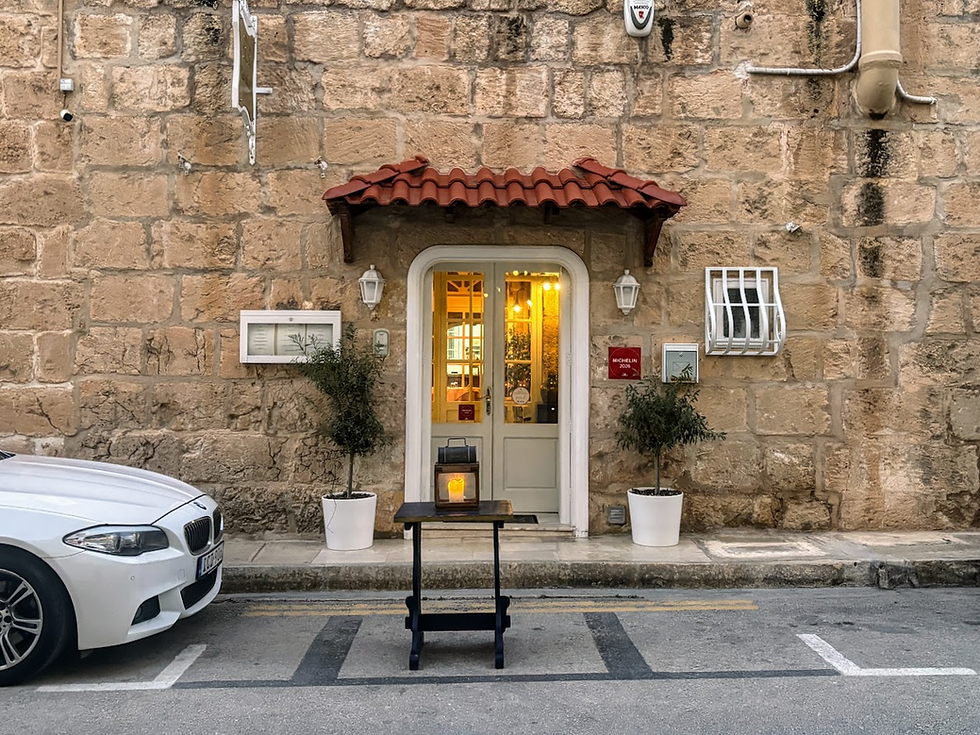
holding their breath. We crossed it and pushed through the red door of Al Sale, the only
Michelin-recommended kitchen on the island open on a Sunday.
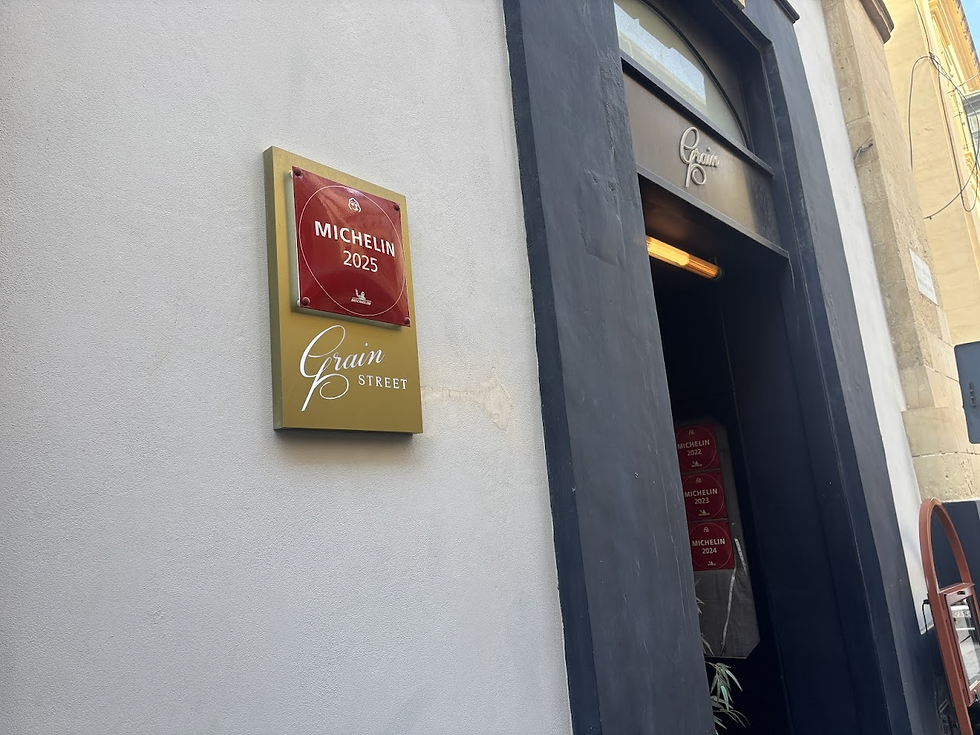
Michelin. In Gozo. That always feels faintly improbable.
We’d eaten here before. Liked it. But this time we came armed, not as wide-eyed diners, but as
auditors of our own appetite.
Inside, the room was calm to the point of reverence. Not dead. Just… restrained. This is Gozo,
after all. Nobody’s flipping tables over a wine pairing. The staff moved lightly, politely, but not
stiff. The kind of courtesy that feels practiced rather than corporate.
Al Sale leans heavily into fish, as it should. You don’t sit in the middle of the Mediterranean and
ignore what’s swimming beneath you. But my partner has never trusted seafood the way I do.
Where I see brine and possibility, she sees bones and betrayal. So the degustation was out.
Fine.
We’d build our own.
The manager, Colombian, I’m almost certain, delivered the specials in a warm, rolling accent,
slipping into Maltese every few sentences like someone who’s earned the right to. He’s been
here long enough to belong, long enough to understand that food on this island is half tradition,
half quiet negotiation.
We scanned. Calculated. Negotiated silently across the table.
How much is too much?What can we not leave without trying?
At some point restraint became theoretical.
When I finally called the waiter over and began listing our selections, I watched his expression
shift. Professional neutrality gave way to widening eyes. Not judgment, more like logistics. I
could see him mapping the table in his head, mentally rearranging plates that hadn’t yet
arrived.
Bread here. Starters staggered. Bigger plates angled.
He nodded. Once. Twice.
We were not ordering dinner.
We were declaring intent.
And for the first time that evening, the quiet room felt like it might have to work for us.
Bread, Oil, Memory
Before we could even settle into our chairs, the kitchen sent out its opening argument.
Bread. Oil. Tomato. Cheese.
Simple, the way Maltese kitchens like to remind you they were here long before tasting menus.
The loaf was still warm, the crust crackling under pressure, the inside loose and aerated with
those irregular air pockets that only proper Maltese bread seems to manage. Tear it open and
steam escapes like you’ve broken something sacred. No slicing. You rip.
Beside it, a long plate carrying three small declarations: kunserva, ġbejna, olive oil.
The oil arrived in a tiny laboratory beaker, measured, almost clinical, which felt faintly theatrical
until we poured it out. It spread thick and gold across the plate, catching the light. First dip:
pepper at the back of the throat, then that round, almond bitterness good oil should have. Not
shy. Not anonymous.
The kunserva wasn’t the standard Three Hills jar you grab absentmindedly from the
supermarket shelf. This was darker. Looser. Alive. Tomato cooked down until it surrendered,
then tangled with oregano, basil, mint, the herbs pushing through instead of sitting politely in
the background. It clung to the bread, staining fingers red.And the ġbejna, tall, white, resting under a slick of oil, looked almost austere. No aggressive
salt. Just cream and lactic depth, soft enough to yield under a thumb. It didn’t shout. It lingered.
We tore. Dipped. Dragged the bread through oil first, then kunserva, then pressed it against the
cheese until everything collapsed into each other.
This is the stuff that built the island. Not plated nostalgia, but fuel. Bread you could carry into a
field. Tomato paste made to last through heat. Cheese that didn’t need ceremony.
Simple, yes.
But simple isn’t the same as easy.
The Onslaught
Then the onslaught began.
Four starters hit the table in quick succession. No easing in. We’d made our intentions clear and
the kitchen answered accordingly.
First up: calamari fritti.
A loose pile of pale-gold rings resting on a bed of tartare, nothing decorative about it. Just squid
and sauce. We’d been assured the calamari were fresh, not frozen, and to be fair, that held up.
The flesh had that clean snap when you bite down, tender without collapsing, no rubber-band
recoil.
But the coating?
Too polite.
The batter clung lightly, almost shy. I wanted aggression, crunch that shatters, something
audible. Instead it whispered. A fry station should leave fingerprints. This one felt restrained.
The tartare leaned heavy on mayonnaise. Yes, there were herbs. Yes, there was freshness. But I
kept waiting for the jolt, caper brine, sharp cornichon, a squeeze of acid to cut through the oil.
Something to remind the squid it came from the sea. Instead, it settled into creaminess and
stayed there.
Good product. Underplayed execution.
Then came the arancina milanese, topped with pulled beef.Visually, it did everything right. A tight, golden sphere, fried to a deep amber crust. Break it
open and the rice held, each grain distinct, saffron perfuming the steam that escaped. The
outside crackled exactly the way you want an arancina to crackle. On top, shavings of hard white
cheese softening slightly from the heat.
But the beef.
The fibres told the story before the flavour did. It pulled apart too easily, not from richness but
from dryness. Whatever sauce once lived with it had either reduced into memory or never
made it to the plate. It sat on top like an afterthought, technically sound, emotionally detached.
I kept thinking how much better it would have been folded into the centre, buried inside the
rice with something braised and sticky, let the saffron rice absorb it, let the filling bleed into the
core. Instead, it felt assembled rather than conceived.
And that’s the difference between a good dish and one that lingers.
The other two starters corrected the course.
First: scallops au gratin.
They arrived still nestled in their shells, the cavities flooded with thermidor, thick, glossy,
unapologetically old-school. On top, a crust of panko and cheese baked to a burnished gold, the
surface blistered and crisp.
Break through that crust and it gave way to heat and cream and shellfish sweetness all at once.
The sauce carried weight, butter, wine, a faint, welcome nudge of mustard cutting through the
richness before it could turn sluggish. The breadcrumbs added resistance, something to chew
against. Texture mattered here.
And the scallops? Cooked with restraint. Just set. No bounce, no chew. They yielded.
If the calamari felt timid, this felt assured. The chef knew where the line was and stepped right
up to it.
Then came a deep bowl of paccheri.
Wide tubes, sturdy enough to hold their own, coated in a dark, glossy beef jus that clung like it
had something to prove. And the truffles, not the synthetic perfume of oil, not the theatrical
shaving at the table, but actual chunks worked through the pasta. Earthy. Muscular. Present in
every forkful.The pasta held its bite under the weight of the sauce. No sagging. No surrender. The meat
within was tender in a way the earlier beef hadn’t been, this time braised properly, fibres
relaxed, sauce woven through it instead of abandoned on top.
We did what greedy people do when something works: we started cross-pollinating. Dragged
the remaining arancina through the jus. Let the saffron rice soak it up.
That’s when it clicked.
This dish had the depth the earlier one lacked. The kind of cooking that doesn’t rely on
ornament, just patience and reduction and knowing when to stop.
By the time we cleared the bowls, the first signs of fatigue crept in. The manager noticed before
we said a word. A small nod. A half-smile.
“I’ll tell the kitchen to slow it down.”
Not a pause.
A strategic regrouping.
Because we still had mains to survive.
Fire and Flesh
After the manager granted us a tactical pause, water refilled, crumbs cleared, breathing
steadied, the mains arrived like reinforcements.
First: grilled octopus.
Thick, muscular tentacles, lacquered in char, edges almost black where the grill had bitten
down. It sat over a pale celeriac purée, herb oil streaked around the plate in sharp green
punctuation.
You can tell when a kitchen understands octopus. This one did.
The outside carried real fire, not decorative grill marks, but proper caramelisation. Underneath,
the flesh was tender without collapsing into mush. You had to chew, but you weren’t fighting it.
A faint thread of garlic ran through the bite, not enough to dominate, just enough to anchor it.
The celeriac beneath was looser than a purée should be if we’re being technical. But it worked
more like a sauce than a base, sweet, earthy, softening the bitter edge that good char brings out
in octopus. Drag a piece through it and everything rounded out.Confident cooking. No theatrics.
Then the duck.
We ordered it deliberately. Duck is a test. It exposes hesitation.
It arrived blushing, skin bronzed and tight, sliced cleanly. A cherry jus pooled beneath, studded
with preserved cherries and scattered blanched almonds, a nod to sweetness without drifting
into retro duck à l’orange territory.
Cut through the skin and it crackled faintly. The flesh held its shape, firm but giving, no grey
band creeping up from the edge. That balance between fat and acid, rendered skin, sweet jus,
the slight resistance of almond, kept it from tipping into heaviness.
This wasn’t nostalgia plating. It felt considered.
By this point, though, I could feel the earlier excess catching up with me. There’s a moment in a
long meal where pleasure turns into negotiation. You’re no longer eating out of curiosity. You’re
eating out of pride.
Roast vegetables and potatoes arrived alongside.
I’ll be honest: I was close to surrender. The vegetables went largely untouched, a casualty of
ambition, but the potatoes I couldn’t ignore. Rough-cut, blistered, crisp on the outside,
collapsing into steam when pressed with a fork.
No microgreens. No reinterpretation.
Just the kind of potatoes that taste like someone’s grandmother still runs the kitchen.
And that’s when it hit me.
We hadn’t just ordered heavily.
We’d tested the room. And the room had held.
No Room for Dessert
Here’s where inexperience cost us.
We left no room for dessert.Somewhere between the paccheri and the duck, appetite turned into stubbornness. We’d
overreached. By the time the menus came back around, we were in that uniquely self-inflicted
kind of pain, the kind that comes from curiosity outrunning capacity.
So we surrendered.
Coffee for the drive. A limoncello each. A few small chocolates placed down quietly, no
ceremony. The kind of exit that says, you’ve had enough.
The damage?
€160 for two.
For that volume of food, that level of technique, that consistency across the board, it borders on
unfair. You’d spend more on the mainland for half the conviction and twice the ego.
As we stood up, slowly, deliberately, I thought about the question hanging over the whole
evening.
Does it deserve its place on the Michelin Guide?
Not every plate was flawless. The calamari lacked bite. The arancina felt misassembled. But the
scallops were confident. The octopus knew fire. The duck held its nerve. The paccheri had
depth. And nothing, not a single thing, felt lazy.
I later read that the chef-patron came back from Toronto, Maltese roots intact, and opened
during COVID. That tells you something about temperament. You don’t make that move unless
you believe in the island. Or yourself.
The dining room runs tight. Staff attentive without hovering. Glasses refilled before they’re
empty. Crumbs cleared without a word. No theatrics. Just discipline.
Is it perfect?
No.
But perfection isn’t the metric. Consistency is. Intent is. Product treated with respect is.
On a sister island that too often gets reduced to pastoral charm and day-trip nostalgia, this
kitchen is pushing forward, not abandoning tradition, but refining it. No shortcuts. No truffle oil
masquerading as luxury. Real work on the plate.
That’s worth something.We walked back into the Gozitan night heavier than we’d intended to be, physically and
otherwise, but certain of one thing:
This wasn’t hype.
It was earned.
And next time, I’m saving room for desser