Discipline Disguised as Comfort

Restaurant: Grain Street, Valletta
Visited On: February 28, 2026
I’ve always thought Grain Street looked like it took a wrong turn somewhere between Savile Row and Strait Street.
From the outside, it doesn’t whisper restaurant. It whispers discretion. Dark navy walls. Clean lines. The faint smell of polished wood and something expensive I can’t quite name, thistlewood, maybe, or just money. You half-expect a man with a tape measure around his neck to size you up before offering you a Negroni.
And maybe that’s the point.
There’s a “showcase” by the entrance, hangers suspended next to tailor’s inch tape, carefully arranged like museum pieces. The mannequins in the window seal the illusion. Three of them, dressed in red and white. For a second I thought it was fashion week cosplay. Gucci. Dior. Some runway ego trip.
Then it clicked.
Not couture. Conquest.
Each mannequin wore a bespoke dress embroidered with one of AX Privilege’s latest trophies from the Michelin Guide. A star for Under Grain. The Michelin Key for Rosselli. A Bib Gourmand for Grain Street itself. Not subtle. Not shy. This wasn’t decoration, it was a statement of dominance.
Three silent figures in the window, dressed not in fabric but in validation.
You don’t put that in a shopfront unless you want people to know exactly who you are.
Standing there, staring at those mannequins, I felt something shift. Not intimidation exactly. Something closer to recognition. These people weren’t chasing approval. They’d already collected it. Now they were curating it, tailoring it, wearing it.
My jaw probably did hang open a little.
And then I stepped inside for my third stop in Chasing Michelin, aware that I wasn’t just walking into a restaurant.
I was walking into a brand that knew precisely how it wanted to be seen.
Dressed for the Guide
I’d been to Grain Street before. Dipped a toe. Played it safe. But I’d never handed over the wheel.
This time we went all in. Carte blanche. Sommelier experience. The whole orchestra.
We came hungry. Not “skipped breakfast” hungry. Proper hungry. Armed with lactose pills like two aging degenerates who know the price of dairy but refuse to live without it.
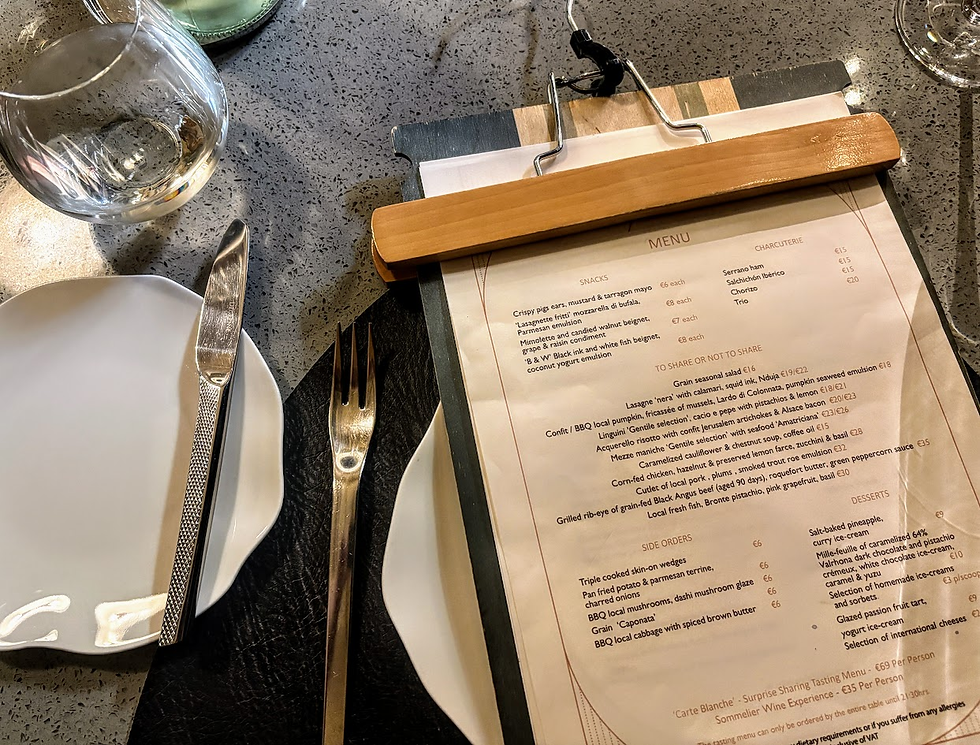
I told the waiter we’d surrender completely, with one condition: the crispy pig ears. Non-negotiable. My partner and I have history with those. Love at first crunch. He smiled, not indulgent, not dismissive. Just a quiet nod that said, we’ve got you.
Then we sat back.
The first wine landed without fanfare: a bubbly from Veneto. Pale, restless in the glass. Semi-sweet, sure, but not cloying. A flicker of vanilla, the kind that shows up at the edges and disappears before you can accuse it of anything. It softened the corners of the room. Took the edge off our appetite just enough to sharpen it again.

Bread followed. Crust that crackled under pressure, interior soft and steaming, the kind that leaves your fingertips slightly damp when you tear into it. The olive oil was poured tableside, slow, deliberate, pooling gold against the plate. Not theatrical. Just confident. Like they knew you were watching.
And then the arioli.
A small medallion, unassuming. But one spoonful and it was unmistakable: ftira biz-żejt stripped of nostalgia and rebuilt with precision. Tomato, mint, olive oil, that saline hum underneath it all. Familiar, but tighter. Cleaner. It didn’t shout Malta. It implied it.
A bowl of olives sat beside it, sharp and briny, cutting through the softness.
It was bread, oil, tomatoes, olives. The oldest trick in the book.
But it felt like a thesis statement.
If this was how they treated the basics, we were in for something serious.
Acid as Architecture
Then the proper starters began landing. No more warm-ups. No more polite overtures.
First: the crispy pig ears and the fried lasagne.
And here a pattern started to emerge, citrus and acid threading their way through heavier dishes like a blade. Not decorative. Surgical. Every time something threatened to lean too far into comfort, a sharp edge pulled it back.
The lasagne arrived almost shy. A small cube, halved and skewered, like street food dressed up for a gala. If memory serves, Chef Victor once said he’d never take this off the menu. After one bite, you understand why.

The outside shattered. Not aggressively, just enough resistance to make the interior feel indecent. Inside, it was molten. Proper molten. Layers collapsing into one another, cheese stretching, meat and béchamel clinging together in the kind of union that usually demands a nap afterwards.
But it didn’t drag.
Sitting next to it, maybe whipped ricotta, maybe something sharper, was a citrus note. Lemon? Bergamot? I couldn’t pin it down. It didn’t matter. What mattered was that it lifted the whole thing. The richness stayed, but the weight didn’t. It tasted like lasagne that had been edited.
Then the pig ears.
I’ve said it before and I’ll say it again: the pig is the most honest animal in the kitchen. You use all of it. Trotters. Jowl. Head. Skin. Blood. Ears. There’s no room for squeamishness if you’re serious about flavour.
Cooking it well, though, that’s where the line is drawn.
They came in a glass bowl, a small mound of golden brown, irregular and unapologetic. Tarragon sauce dotted over the top in restrained little pools, delicate leaves resting like they’d wandered in from a garden that had no idea what violence had just occurred in the fryer.
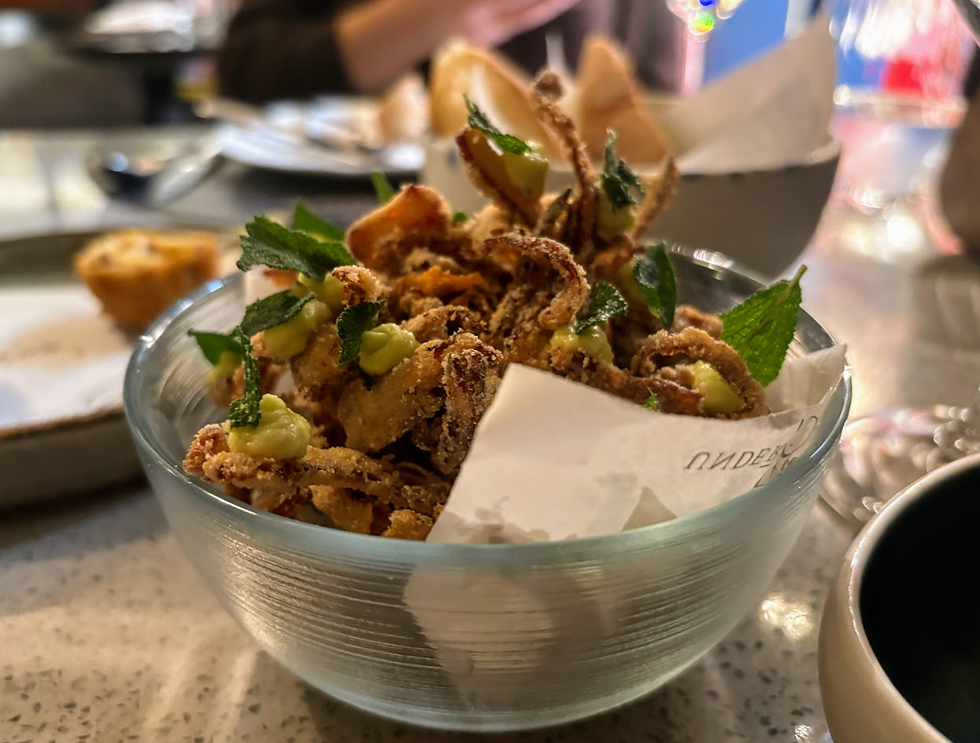
Yes, these were pig ears. The same anatomy that becomes pork scratchings in a plastic bag at a pub.
But this? This had posture.
The crunch was immediate and clean. No sag. No oil sheen clinging to your lips. No grease bleeding onto the plate. Just crisp giving way to gelatinous chew, that addictive, slightly sticky texture that makes you reach for another piece before you’ve finished the first.
They were salted properly. Confidently. And underneath the savoury punch was a faint sweetness that caught me off guard, almost like a deeply savoury version of tal-festa doughnuts. Not sugary. Just that nostalgic, fried warmth.
They lasted seconds.
We scraped the bowl without shame, dragging stray sauce through crumbs, chasing the last shards like we were afraid someone might take them away.
Only then were we ready for pasta.
Comfort, Edited
As always, the wine arrived first.
A Sauvignon Blanc from Venice. Pale, almost nervous in the glass. The first sip came soft, peaches, apricots, that lazy stone-fruit sweetness that makes you relax too early. Then it snapped. Raspberry. Green apple. A flash of something floral that disappeared before you could name it. It wasn’t gentle. It kept shifting. A reminder that this wasn’t going to be a sleepy pasta course.
Then the plates landed.
The lasagne nera hit the table like a dare. A black slab, squared off and deliberate, ink-dark pasta holding its shape with quiet confidence. Around it, calamari stewed in a red sauce that pooled at the base, thick, oily, unapologetic.
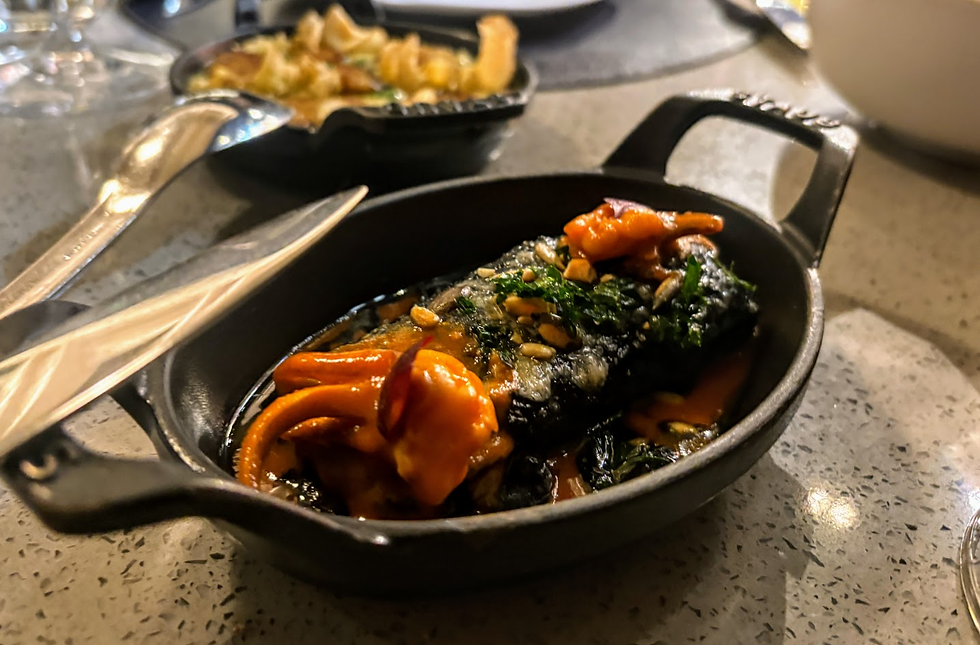
Cut through it and the pasta surrendered instantly. It melted. No resistance. The tomato sauce underneath wasn’t bright and cheerful; it was deep, slow-cooked, almost brooding. The nduja crept in late, warmth blooming at the back of the throat instead of punching you outright.
The calamari carried that slight briny edge, not fishy, just ocean-adjacent, and then a squeeze of citrus cut straight through the fat. Again with the acid. Again with that refusal to let things become heavy for the sake of it.
And yes, there was oil at the bottom of the plate. A glossy red slick catching the light. Normally a warning sign. Here, it felt intentional. Something to drag the last forkful through. Excess, but controlled.
Then the risotto.
A Grain Street staple, and you understand why the second it hits the table. The aroma alone is aggressive, savoury, saline, smoky heat rising in waves. It doesn’t ask for attention. It takes it.
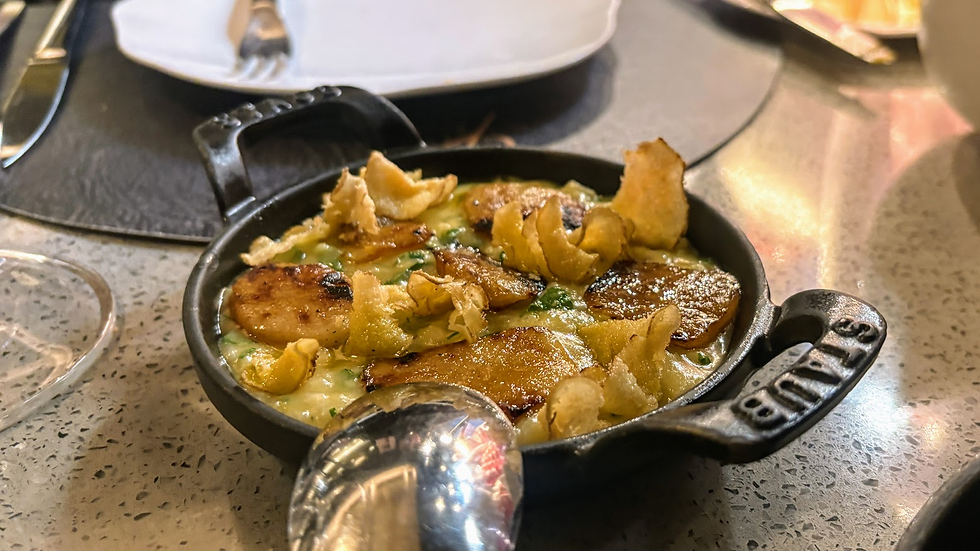
The rice was exactly where it needed to be. Not soupy. Not stiff. Creamy without sliding into baby-food territory. Each grain distinct but willing to cling to its neighbour.
Confit artichoke medallions folded through it, soft to the point of collapse, almost buttery. Then the contrast: impossibly thin fried potatoes scattered over the top, brittle and golden, shattering under your fork.
Alsace bacon threaded through the whole thing, salty, smoky, cut into pieces that demanded chewing. And somewhere in there, a citrus note again. Not obvious. Just enough lift to stop the richness from sinking you.
That’s the pattern now.
Fat. Salt. Heat.
Then acid, like a hand on your shoulder, pulling you back before you go too far.
You start to realise this isn’t indulgence for indulgence’s sake.
It’s discipline disguised as comfort.
Escalation
By now the pressure was building.
You can feel it when you’re deep into a tasting menu. The early courses flirt. The pasta seduces. But the meat course? That’s where a kitchen either flexes or folds.
So when the waiters approached carrying four fresh glasses, not two, we exchanged a look.
This wasn’t just meat.
This was escalation.
There was a brief wobble. My rosé tasting pour landed in a red wine glass; the red in the narrower stem. A small thing. But here, small things matter. The waiter clocked it instantly, apologised without theatrics, and whisked them away.
No cracks in the veneer. Not today.
For the fish, they poured a 1919 Rosé from Marsovin. In that moment, buoyed by fat and acid and rising anticipation, it smelled like strawberries crushed between fingers. Banana foam sweets. Something floral drifting at the edges. Later, I’d glance at the official tasting notes and see a different story entirely.
Wine is funny like that. It tells you what you’re ready to hear.
Then the fish arrived.
Sea bream. Two precise squares, skin blistered and lacquered to a perfect crisp. The kind of skin that makes a sound when your fork breaks through it. Underneath, the flesh barely holding itself together.
The plate was alive with green, bright sauces and deeper olive tones brushed and pooled with intention. Wilted greens tucked beneath. Cubes of pink grapefruit scattered like punctuation. Basil. Pistachios. Crisped kale.
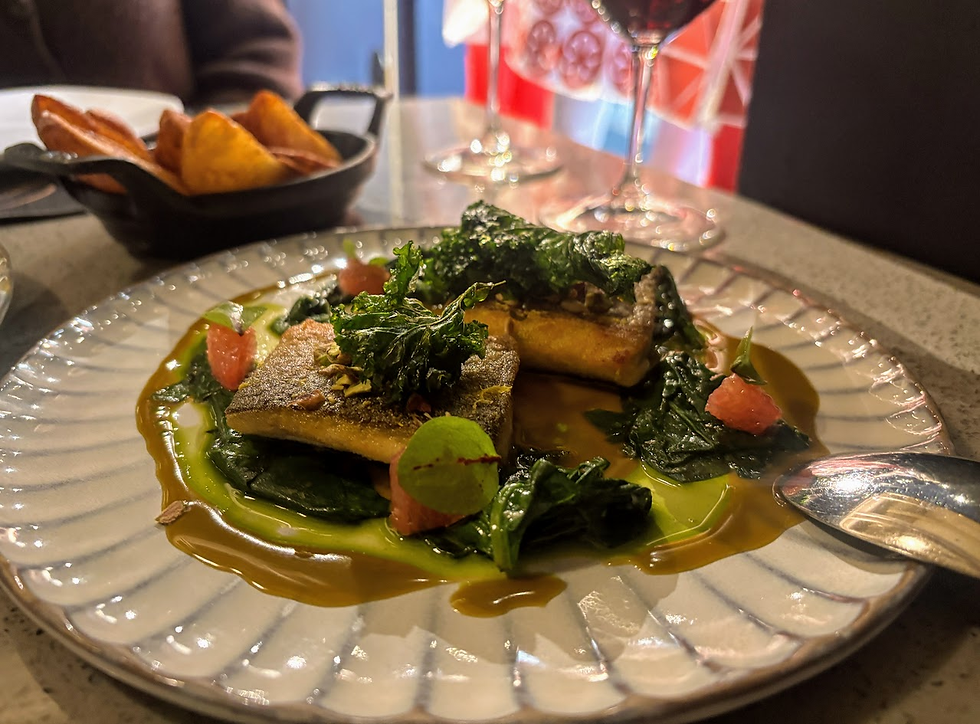
It could have tipped into chaos.
It didn’t.
The fish itself was soft, almost buttery, flaking with the slightest pressure. The skin crackled. Kale and nuts added sharp, dry crunch against the yielding flesh. Then the grapefruit cut straight through, not sweet, not bitter, just clean. Acid again, doing its quiet work.
There were wedges alongside, tender, cooked properly, no chalkiness.
But they needed salt.
Not much. Just a pinch more courage. On their own they felt slightly restrained, like they were waiting for permission. Dragged through the sauces, though, they came alive. Oil, citrus, herbs compensating where seasoning hesitated.
And that’s the thing about a place like this.
It wasn’t flashy. It didn’t rely on theatre.
It was composed. Thought through. Confident.
And at this point in the meal, confidence matters.
A Bird, Sharpened
The red came next, Hauteville from Delicata.
Deep ruby in the glass. The first inhale caught me off guard, buttered warmth, almost creamy, then a flicker of salinity. Not briny, not metallic. Just something savoury. Thyme showed up on the palate like it had been waiting for its cue.
This wasn’t a wine for sipping absentmindedly.
This had a job to do.
And then the plate arrived.
The best way I can describe it? Like a roast chicken went to the spa and came back disciplined.

The chicken was cut cleanly, skin blistered and golden, resting over layered greens, bright, herbaceous, controlled. There’s a visual language Grain Street keeps returning to: vibrant greens against rich protein. It’s not accidental. It’s reassurance.
Ribbons of zucchini curled around the plate, soft but not collapsing, topped with a thin sliver of fresh cucumber that snapped when you bit into it. Pumpkin seeds scattered over the skin. Hazelnut dusted across the plate like it had settled there naturally.
Underneath that crisp skin, a blitzed paste of hazelnut and preserved lemon clung to the meat, nutty, sharp, faintly fermented. It deepened the bird instead of weighing it down.
The chicken itself was exactly where it needed to be. Moist, but structured. No shredding collapse. No dryness. Just clean, confident cookery.
Lemon and basil threaded through the whole thing, again lifting, again refusing to let the dish tip into heaviness. That’s the through-line tonight. Fat meets acid. Comfort meets discipline.
Alongside it came barbecued mushrooms glazed in dashi. Dark. Glossy. Almost meaty in their own right. They didn’t feel like a side, more like a shadow protein, reinforcing the savoury backbone of the plate. Umami folding into umami.

The overall effect was surprising.
It was roast chicken, yes. But stripped of Sunday lethargy. No meat sweats. No nap looming on the horizon.
Just nut, herb, smoke, citrus.
A bird that had been sharpened instead of softened.
Sugar, Controlled
Savoury done. Belts metaphorically loosened. Time for sugar.
The wine arrived first, 2022 Mas Amiel. One inhale and it was tarte tatin in liquid form. Baked apple, vanilla, custard. But then a faint herbal edge crept in, stopping it from tipping into dessert-wine cliché. Sweet, yes. But alert.
Two plates followed.
First: a glazed passion fruit tart with yogurt ice cream. Rectangular. Clean. No architectural ego. Just sharp lines and confidence.
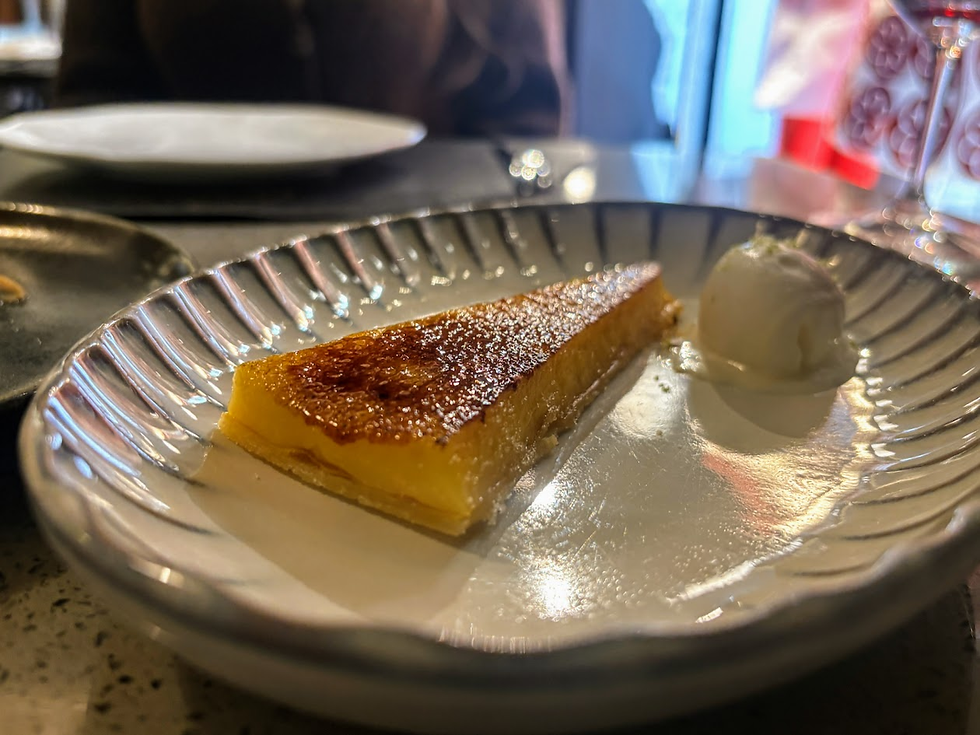
The brûléed top cracked clean under the tap of a spoon, that dry, satisfying shatter. Underneath, the passion fruit custard was bright and unapologetic. It tasted like a Solero melting too fast under a July sun, sharp citrus wrapped in cream, nostalgia without the stickiness. The cold yogurt ice cream pulled everything back into balance. Sweet met sour. Heat met chill.
It didn’t try to reinvent the tart.
It just executed it properly.
Then the mille-feuille.
A modern stack, Valrhona dark chocolate crémeux in a tight quenelle, wafer balanced on top, pistachio crémeux above that, another wafer sealing the deal. Alongside, white chocolate ice cream. Smears of caramel and yuzu cutting across the plate like brushstrokes.
This could have been heavy. Oppressive. A sugar bomb.
It wasn’t.
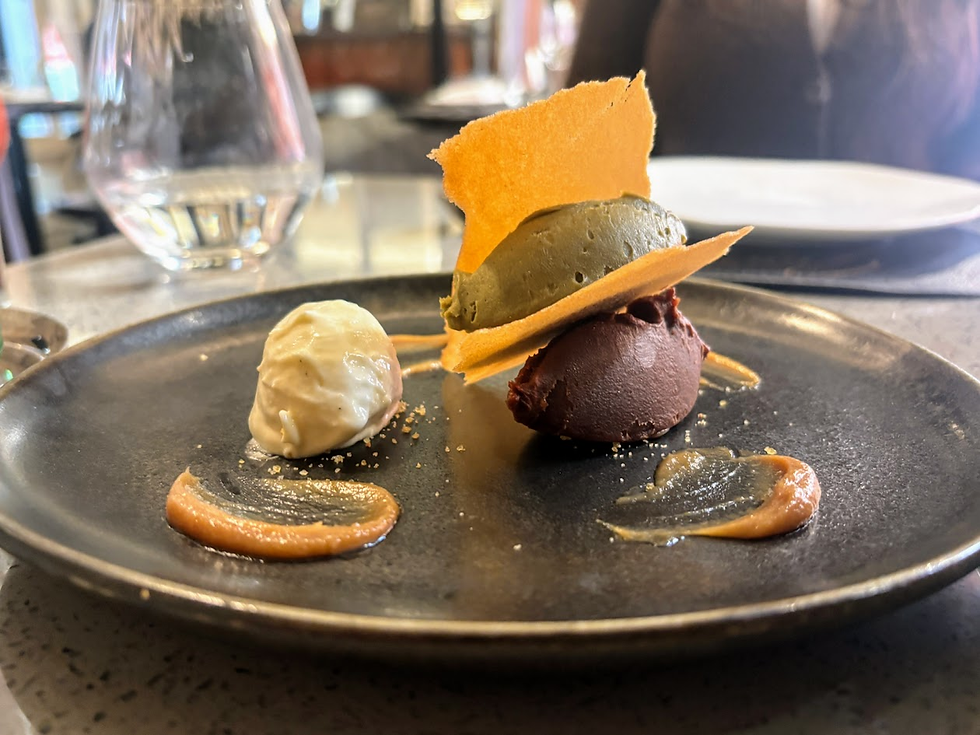
The pistachio was light, almost airy, carrying its nuttiness without dragging. The chocolate was deeper, coffee bitterness, a whisper of tobacco, salted caramel lingering at the edges. The wafer cracked with purpose. The caramel had that unmistakable Werther’s Originals warmth, but cleaner, grown up.
Every bite shifted slightly depending on what you dragged your spoon through.
It was rich.
But it never suffocated.
Espressos arrived before the bill, dark, clean, crema intact. A small almond biskuttina on the side, crisp and fragrant. The kind of detail that tells you the kitchen doesn’t clock out just because the sweet course is over.
We stepped back into Valletta full, lightly drunk, and walking slower than we had earlier.
The Warning in the Window
Grain Street is not built on gimmicks.
It’s built on control.
Chef Victor’s television persona might be fire and volume, but what’s happening in that kitchen is restraint. Acid deployed with intent. Fat allowed to exist but never dominate. Technique without theatrics.
At €221.95 for two, carte blanche, sommelier pairing, no corners cut, you begin to understand the Bib Gourmand. This isn’t showboating. It’s value with discipline.
And if this is the “casual” arm of the group, then the mannequins in that window aren’t decoration.
They’re a warning.