A Quiet Symphony at One80
Restaurant: One80 St Christopher Street, Valletta
Visited On: March 6, 2026
Early Seating
The door opened onto a room that was just waking up.
Six in the evening, the official start of service. Early enough that the place still felt spacious, the tables mostly empty, the staff moving with the slow pace that disappears once the orders start piling up.
I always aim for that first wave.
You see the place more clearly before it fills with people.
This was One80 St Christopher Street, one of five under the One80 name, but the only one that managed to land a recommended spot on the Guide. That alone made it worth the visit.
The waiter met me halfway across the dining room.
“Good evening, Mr—”
He said my name without hesitation.
He remembered the call earlier that day when I’d phoned to amend the booking.
A small thing. But in restaurants, small things matter. They’re often the difference between service that’s merely competent and service that actually gives a damn.
The room itself was immaculately put together. Low lighting, warm wood, ribbed glass panels on the entrance doors catching the light just enough to give the whole place a quiet glow. Mid-century modern without feeling like it was trying too hard.
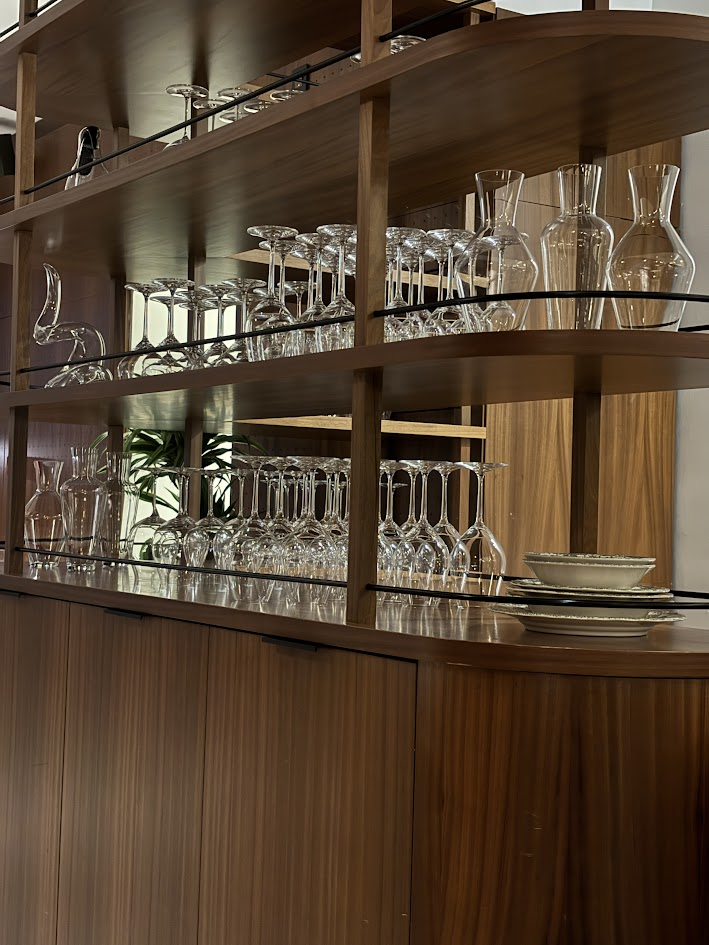
The sort of interior I’ve always imagined for my own house.
Unfortunately imagination and taste are two very different things.
I’ve never quite managed the second.
Only one other table had arrived before me, and of course I was seated close enough to hear them.
They were arguing over the menu.
Not loudly, just that low, slightly tense whisper of people trying to look decisive in a restaurant they clearly didn’t understand yet. Eventually they gave up and called the waiter over, who patiently talked them through the options.
At some point one of them announced he was lactose intolerant.
I couldn’t help myself. I sneered a little.
So was I.
Technically.
But some of us accept the consequences when butter and cream are involved.
Gluttony requires a certain amount of commitment.
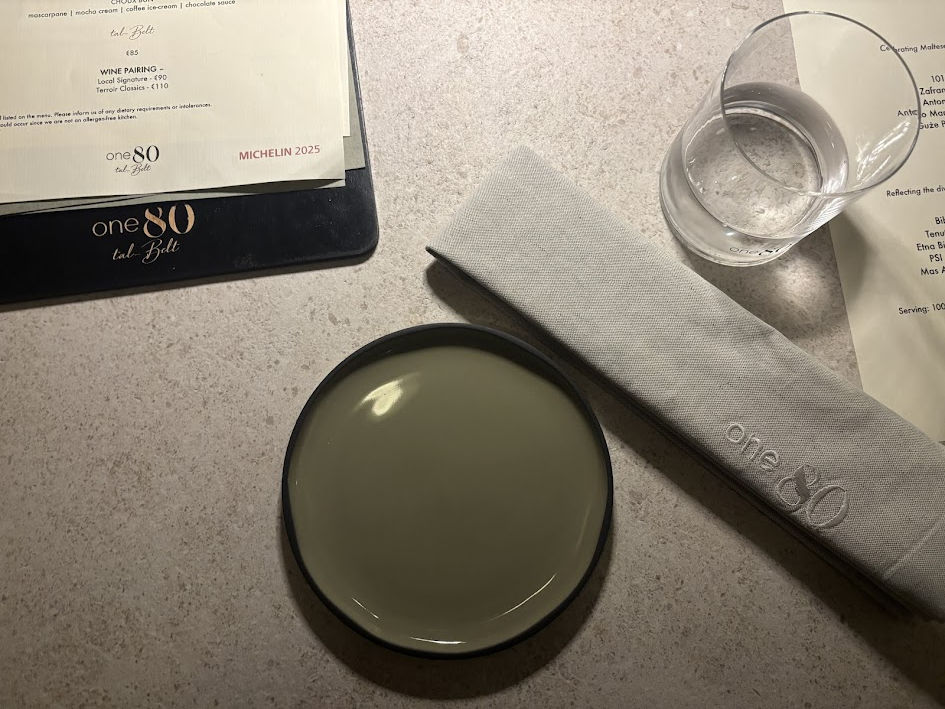
Commitment to Gluttony
My waiter, Gary, returned with the menu.
He’d become a quiet, constant presence over the course of the night, appearing exactly when needed, never hovering long enough to become irritating. The kind of service that feels effortless, which usually means someone is working very hard behind the scenes.
I already knew what I wanted.
The tasting menu.
But restraint has never been one of my strengths, so I also asked, without much hesitation, to add the lobster royale.
Why come this far only to behave sensibly?
I asked for the wine list as well.
When it arrived, I felt a brief jolt of financial reality. The wine pairing, rather boldly, cost more than the tasting menu itself.
Ambitious.
I quietly abandoned that idea and settled on ordering by the glass instead.
Then the waiter returned with something unexpected.
A tablet.
On it was their entire wine inventory, an app that let you scroll through bottles by region, grape, colour, tasting profile, or any other variable a sommelier or obsessive wine drinker might dream up.
It was impressive. Slightly intimidating. Also faintly dangerous if you’re the sort of person who enjoys falling down rabbit holes.
I kept it simple.
A glass of Riesling to start.
Moments later the bread basket landed on the table, warm and fragrant.
And just like that, the night properly began.
The Bread Test
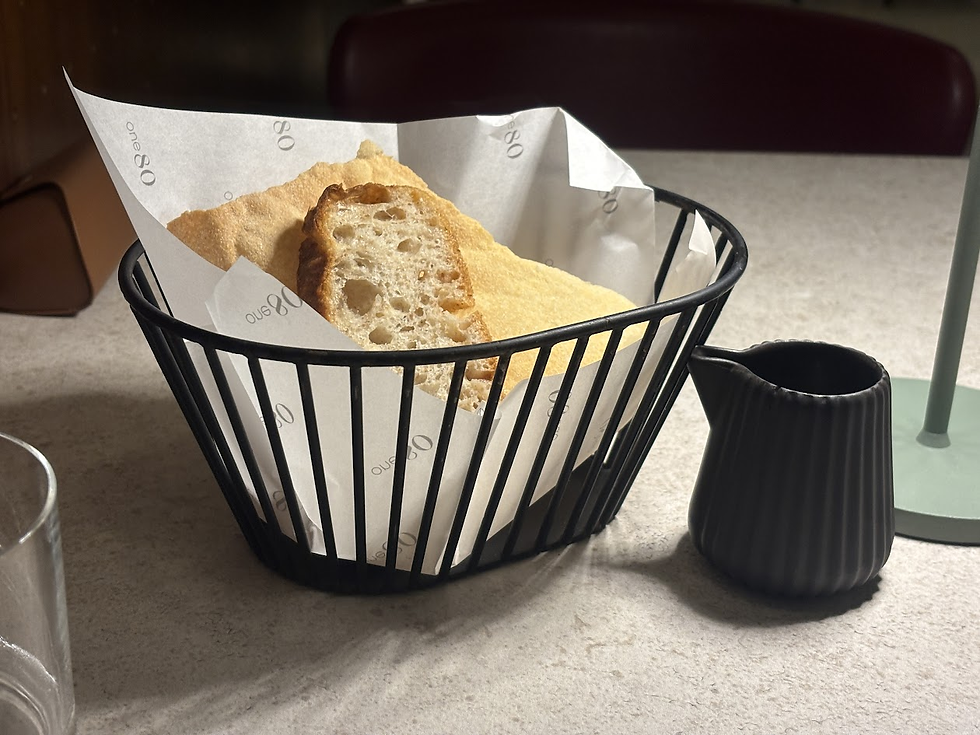
The bread basket arrived with two things.
A thick slab of focaccia, and a sheet of something I’d never seen before.
The focaccia was dense, springy under the fingers, its crust salted just enough to wake up the palate. Rich, but mercifully not dripping in oil the way lesser versions tend to be.
The other piece turned out to be carta da musica, a Sardinian cracker so thin it seems almost theoretical. Paper-like. Brittle. It shatters the moment you touch it.
The olive oil sat beside it in a small ribbed beaker, colour-matched to the room like it had been chosen by an interior designer. Golden. Nutty. The kind of oil you notice immediately.
What struck me most, though, was the restraint.
The basket wasn’t overflowing. No theatrical pile of bread designed to distract you from the bill later.
Just enough.
Measured. Intentional.
It was the first sign of something I would see again and again throughout the night: a kitchen that knew exactly how far to go, and, more importantly, when to stop.
The Opening Movements
While I waited for the amuse bouche to arrive, I noticed something small.
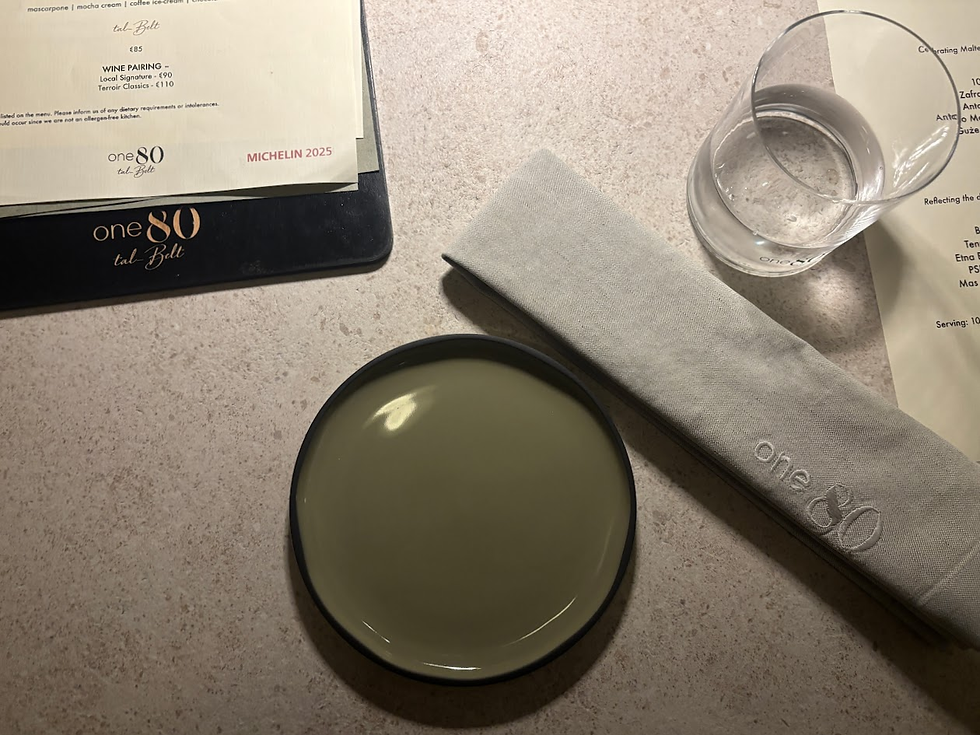
Even the water glass was branded.
Just a discreet logo pressed into the glass. Subtle enough to avoid looking kitschy, but deliberate enough to remind you that someone had thought about it. In places like this, consistency is everything.
Then the first amuse landed.
An oyster, resting on a small mound of salt like a jewel on display. Inside the shell it bathed in buttermilk, topped with a neat mound of avruga, that clever, sustainable caviar substitute that looks the part without emptying the ocean. A bright green oil cut through the pale whites and greys.
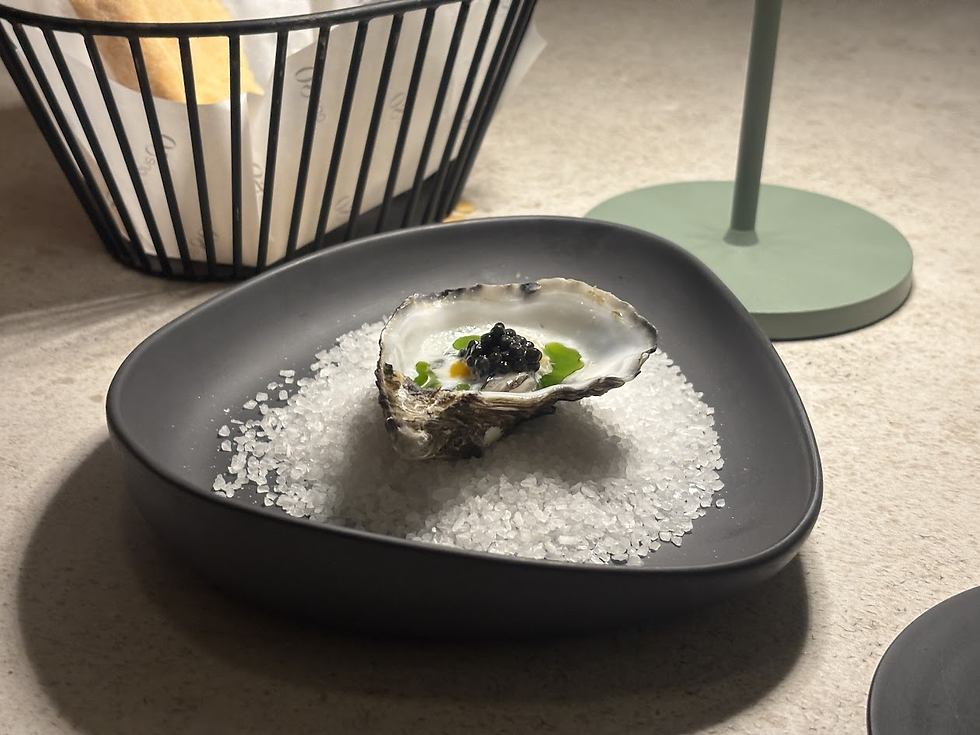
Presentation mattered here. You could tell immediately.
I picked it up, gave it a small shimmy to loosen it from the shell, and sent it down in a single gulp.
Oysters, as Bourdain often said, are food at its most unapologetically indulgent, briny, slippery little declarations of appetite.
This one delivered.
Salty. Clean. The buttermilk rounding out the oceanic punch, with a faint warmth from chillies hiding somewhere beneath the surface.
The second amuse followed close behind.
A Comté and truffle gougère, a neat golden sphere of pâte à choux crowned with shaved truffle. It looked almost too perfect to disturb.
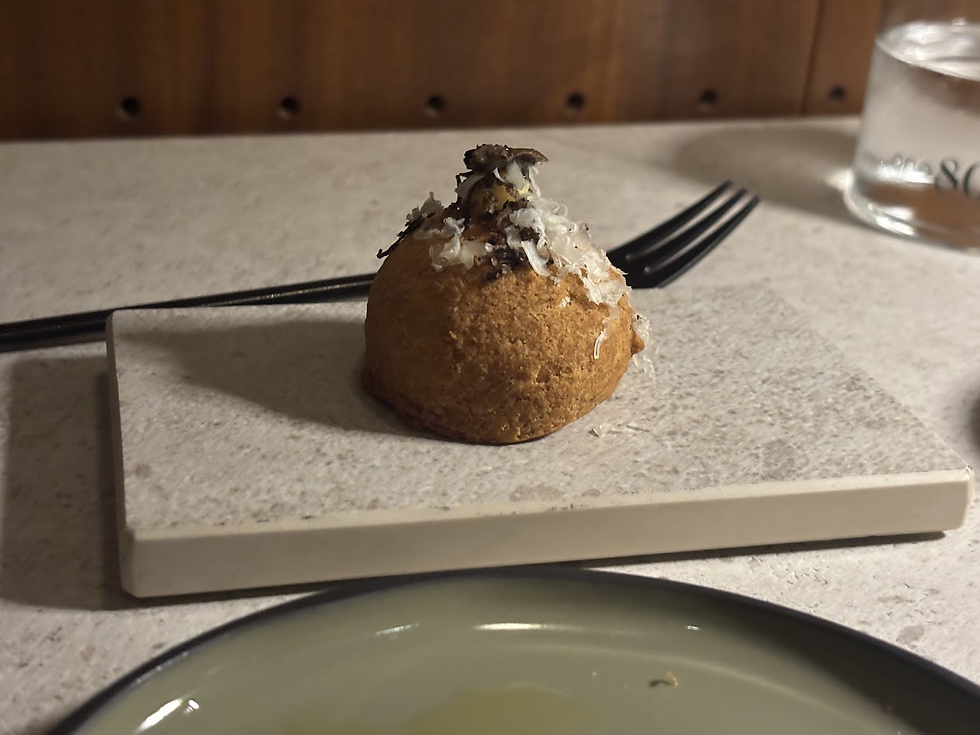
But bite into it and the structure collapsed instantly, the shell giving way to a warm Comté custard inside. Rich, nutty, faintly peppery.
Then the truffle arrived late, like a curtain call, stretching the flavour out for a few seconds longer than expected.
The final amuse was almost intimidating in its precision.
They called it a chicken liver sandwich.
What arrived looked more like architecture.
Two impossibly thin squares of potato crisp stood upright, holding between them a layer of silky liver parfait and a streak of kumquat jam. Hazelnuts scattered on top.
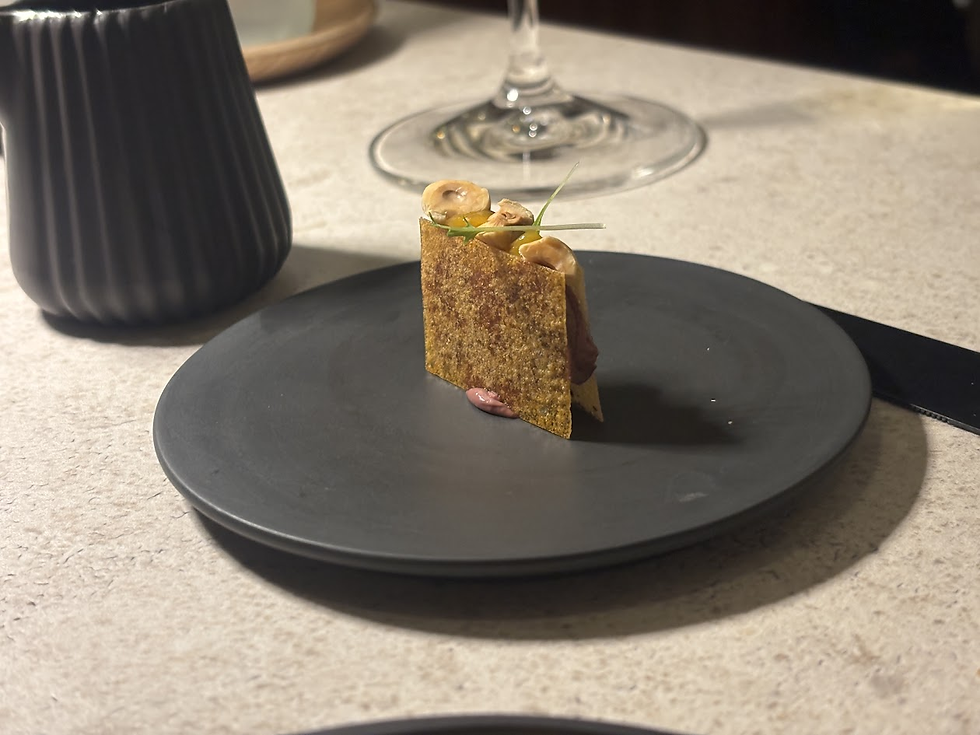
The potato shattered delicately at the first bite.
Then came the liver, deep, rich, slightly bitter, cut cleanly by the sharp citrus of the kumquat. The hazelnuts added just enough crunch to keep the whole thing from drifting too far into decadence.
Three small bites.
Each one carefully constructed.
By the time the plates were cleared and the waiter quietly checked that everything had landed well, it was obvious what kind of place this was.
Part kitchen.
Part studio.
And the night was only just getting started.
Precision Cooking
The next plate arrived looking almost cryptic.
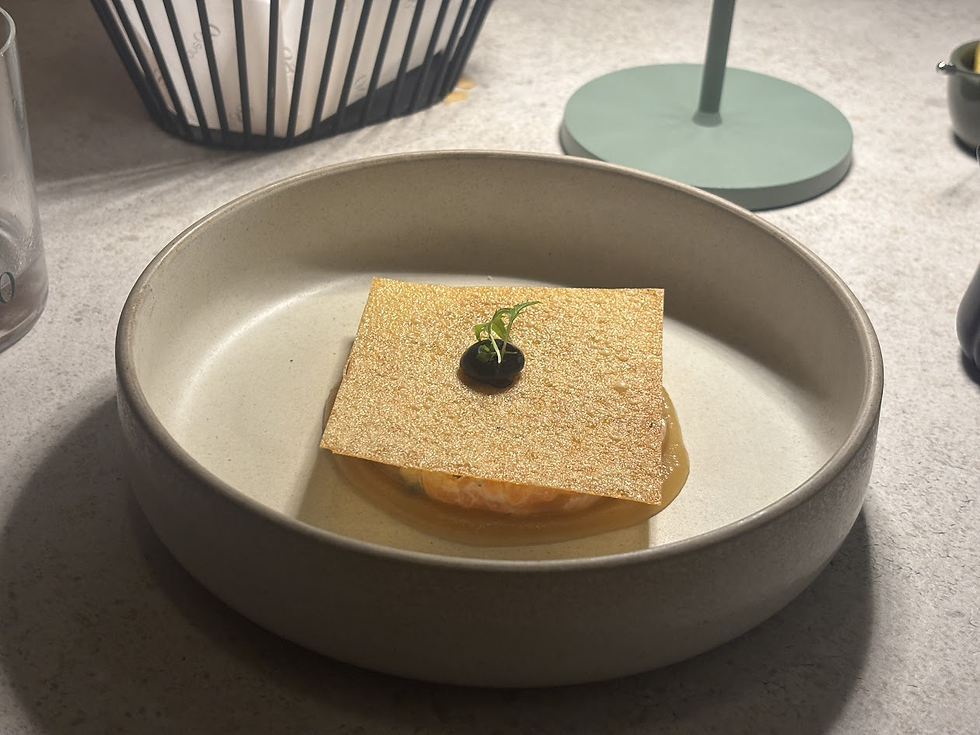
An off-white bowl. At its centre, a perfect square topped with a small black dollop. Nothing else.
It felt deliberate, minimal, composed, almost architectural.
My waiter leaned in and explained: salmon tartare.
Once he started listing the components, the whole thing made more sense, and my appetite kicked in immediately.
At the base sat a layer of pear and apricot jam. On top of that, finely chopped salmon folded through with cream cheese, capers and chives. Covering the whole structure was a thin sheet of crisp potato, about ten centimetres across, acting like a fragile lid.
The black dot at the centre?
Black garlic.
I didn’t wait long.
The spoon broke through the potato with a sharp crack. It shattered like glass.
I scooped up a bite, making sure to catch a bit of everything.
The first thing you notice is the texture. The potato is impossibly crisp, giving way to the soft, finely chopped salmon beneath it. The fish is bright and clean, dotted with chives, with capers threaded through for that salty punch.
Then the sweetness appears.
The pear and apricot underneath soften the whole thing, rounding off the sharp edges of the fish. The black garlic adds depth, sweet, dark, slightly spicy.
The flavours linger longer than expected.
Light at first, almost delicate.
But a few seconds later a gentle warmth spreads across the palate, the way a sip of whisky blooms slowly after it goes down.
A quiet dish.
But one that knew exactly what it was doing.
The Kitchen’s Rhythm
As I waited for the next course, something about the rhythm of the meal became clear.
This kitchen wasn’t interested in overwhelming you.
It was about pace.
From my table I could hear the soft hum of the kitchen behind the wall. Not loud enough to intrude on the dining room, but just audible enough to remind you that serious work was happening a few metres away.
The hiss of meat hitting a hot pan.
The quick clatter of steel on steel.
The muffled call of orders moving down the line.
Nothing chaotic. Just the quiet mechanics of a kitchen in motion.
Then the next plate arrived.
A wide white bowl, almost empty except for two delicate dumplings sitting in the centre. Beneath them, a small pool of foamy coconut sauce. On top, fresh mint and a spoonful of peanut and chilli rayu.
The colours were restrained but striking. Bright green mint. Angry red chilli oil. Everything else pale and understated.
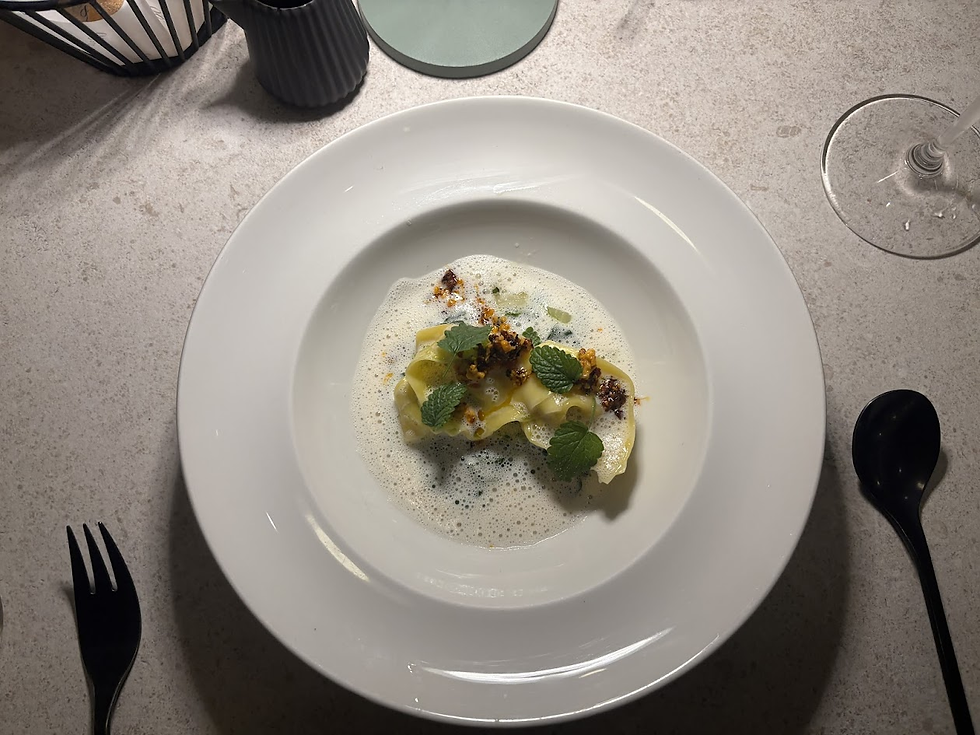
Only when the spoon dipped beneath the surface did the rest of the dish reveal itself.
Hidden under the coconut foam was wilted pak choi, adding an earthy backbone to the whole composition.
The cutlery suddenly made sense.
A spoon and a fork.
An odd pairing for Western diners perhaps, but completely natural across much of Southeast Asia.
I loaded the spoon and went in.
Everything came together immediately.
The dumpling skin was soft and delicate, barely holding the tender filling inside. The peanut rayu brought heat and crunch. The pak choi grounded the dish, while the coconut foam kept everything light.
No component felt decorative.
Everything had a job.
The first bite took me somewhere unexpected.
Straight back to the food markets of Singapore, those humid nights wandering between hawker stalls, the air thick with spice, herbs and smoke.
This dish carried that same spirit.
Nutty. Herbal. Fresh.
A reminder that Asian cooking, when done properly, isn’t heavy at all.
It’s alive.
Confidence
By now my Riesling was gone.
Knowing a fish course was coming, followed by meat, I decided it was time to change direction. At Gary’s suggestion, I ordered a glass of Saint-Émilion.
A safe choice perhaps.
But a very good one.
While I waited for the wine, a small moment across the room caught my attention. One of the waiters was greeting an elderly couple at the door.
Not with the polite distance reserved for first-timers.
With familiarity.
They were clearly regulars. Names remembered. Hands shaken. A few warm words exchanged before they were led to their table.
That sort of thing tells you a lot about a restaurant.
A moment later the sommelier appeared beside my table.
Young, composed, a WSET Level 2 pin fixed neatly to his lapel like a badge of honour.
What impressed me wasn’t the pin.
It was the fact that he already knew everything.
Which course I was on.
Which wine I’d ordered.
Even where I was in the tasting menu.
He didn’t ask.
He simply confirmed.
Later that night he even messaged me on Instagram to compliment my choice of wine, although, in truth, the credit belonged partly to Gary. I didn’t have the heart to correct him.
Then, for a brief moment, Chef Ryan emerged from the kitchen.
No starched whites. No towering toque.
Just a T-shirt under his apron and a pair of closed-toe Birkenstocks.
You can tell a lot about a chef by the way he dresses.
This wasn’t some relic of the Escoffier era barking orders from behind spotless jackets and rigid tradition.
He looked young. Relaxed. Confident.
The kind of chef who understands the rules well enough to ignore them.
And judging by the food so far, he was doing exactly that.
The Main Act
The fish course arrived and pulled my attention straight back to the table.
A neat fillet of sea bass sat in the centre of a wide plate, resting on what my waiter described as a warm tartare sauce. Beside it, a small bundle of grilled broccolini, softened just enough by the heat.

But the first thing you noticed wasn’t the fish.
It was the thing stretched across the plate like some bizarre architectural beam.
Long. Ridiculously long.
At first glance it looked like an oversized Cheeto.
In reality it was a fried parmesan and crab stick, balanced carefully across the sea bass and broccolini like a crispy bridge.
Another classic dish, reworked with just enough humour.
The sea bass itself was exactly what you want from good fish: tender, buttery flakes that separated effortlessly under the fork, the skin just crisp enough to give a bit of resistance.
Simple.
Well salted.
Executed properly.
The broccolini was equally restrained, tender, lightly charred, seasoned without overwhelming the plate. That seemed to be a running theme here. This kitchen understood something many don’t:
how to taste before salting.
The parmesan-and-crab stick shattered under the knife, its exterior brittle and crisp while the inside remained soft and delicate.
Then the tartare sauce pulled everything together.
Warm, briny, bright with capers. Acidic enough to cut through the richness without ever becoming heavy.
At one point I joked to Gary that if someone handed me a bowl of those crab sticks and another bowl of that tartare to dip them in, I’d probably die a very happy man.
The dish was surprisingly light for what many restaurants would treat as a main course.
But that, again, was the point.
The pacing here was deliberate.
Gary offered me a pause before the next course, perhaps unsure how aggressively I intended to attack the rest of the menu.
Around us the room was beginning to fill with post-graduation celebrations, the quiet early calm giving way to the soft buzz of a busy dining room.
I waved the pause away.
I was ready for the next course.
The cutlery arrived before the dish.
A steak knife.
And… tongs.
No delicate fork this time. Just a pair of miniature tongs sitting beside the knife like a quiet warning.
This course meant business.
When the plate landed, the choice suddenly made sense.
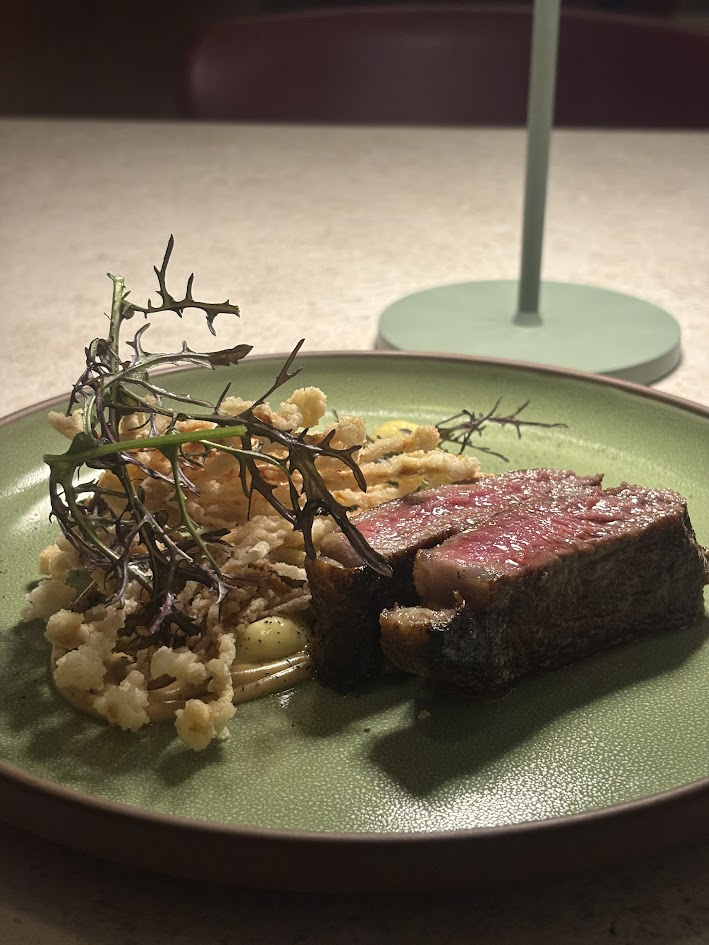
The dish came on a plate the colour of sage, a soft green that made the meat on top glow almost impossibly red. Beneath it sat a smear of leek and onion ranch, splashed with a bright French dressing.
And on top: two thick pieces of sirloin.
Perfectly pink. Almost blushing.
Beside them rested a bundle of battered enoki mushrooms, crisp and golden.
Steak is a funny thing on a tasting menu.
It’s simple, almost stubbornly so. But that simplicity is exactly what makes it dangerous. There’s nowhere to hide. Either the kitchen knows what it’s doing, or it doesn’t.
I cut into the first piece.
For a split second the knife resisted and a small panic set in. Had the magic run out?
It hadn’t.
The knife was just a little dull.
The beef itself melted immediately. Tender, buttery, with a deep sear that bordered on crisp. The char carried through the flavour beautifully.
Again, the seasoning showed restraint.
Salted just enough to wake the meat up, never enough to dominate it.
The leek and onion ranch added richness, while the French dressing cut through with a bright, tangy punch that lifted the whole plate.
It was excellent.
But the real surprise was the mushrooms.
At first glance they looked like a garnish.
They weren’t.
The battered enoki shattered with a crisp bite, light and brittle like the best shoestring fries you’ve ever had. Salty, crunchy, impossible to stop eating.
Suddenly the dish revealed itself.
This wasn’t just steak.
It was steak frites, reimagined.
Classic French technique colliding with the light tempura crunch of Asian cooking. A little acid tying it all together at the end.
I demolished the plate.
Even when the tongs struggled to grab the last few crispy strands of mushroom, I persisted.
There was absolutely no chance I was leaving any of that behind.
Sweet Things
By this point I felt satisfied.
Not painfully full. Just comfortably, contentedly satiated.
That, I realised, had been the kitchen’s plan all along.
The pacing of the meal had been deliberate, each dish landing with just enough space to let the previous one settle.
The pre-dessert confirmed it.
A small transparent glass appeared in front of me. At the bottom, delicate shards of pastry and chocolate. Above them, a layer of fresh blackcurrants. And on top, what the waiter called a coconut powder.
Four components.
That was it.
But it worked.

The pastry shattered lightly, adding a gentle crunch. The blackcurrants brought a sharp, tangy freshness. And the coconut powder floated above everything, airy and bright, with a subtle citrus lift that tied the whole thing together.
It felt almost like a lemon cheesecake that had gone slightly rogue.
Familiar in spirit, but lighter, looser, more playful.
More importantly, it did exactly what a pre-dessert is supposed to do.
It reset the palate.
The culinary equivalent of the warm wet towels you get after demolishing a rack of ribs, simple in concept, but deeply satisfying when executed properly.
And here, it was executed perfectly.
When the dessert arrived, curiosity got the better of me and I asked if Chef Ryan handled the pastries himself.
The waiter smiled.
“He does everything.”
My cutlery appeared moments later: a spork. But not the miserable wooden sort that comes with a supermarket lunch. This was something else entirely, sleek, polished, almost sculptural.
The final dessert arrived looking almost modest.
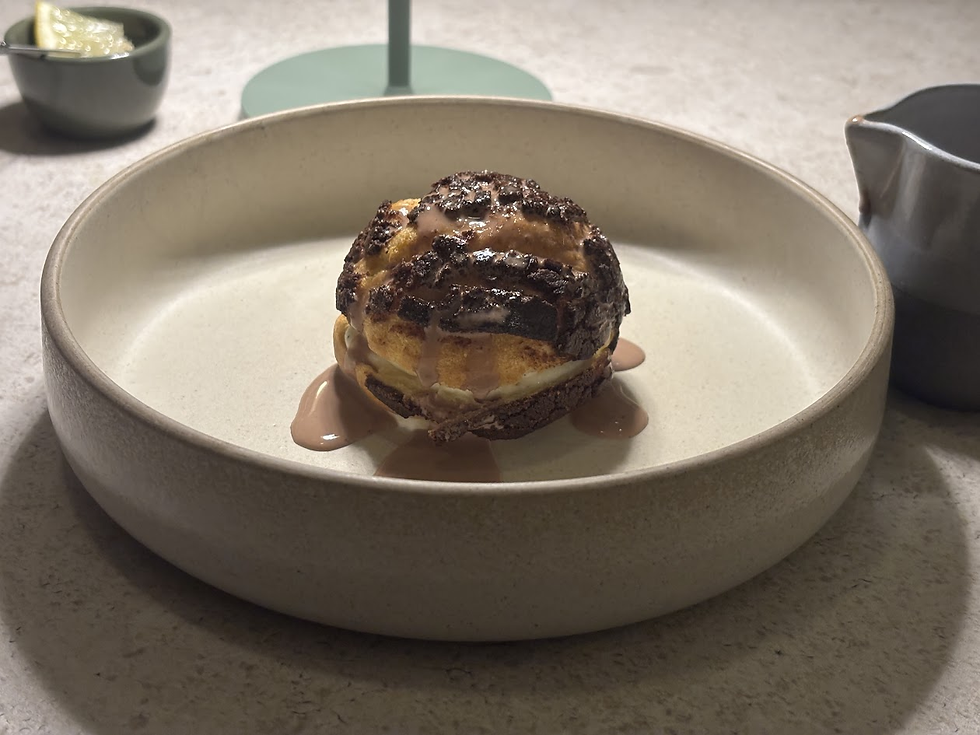
A single choux bun sat alone on the plate, its top blistered and beautifully browned.
But the simplicity was deceptive.
Inside the bun was a mixture of mocha cream, mascarpone and coffee ice cream. Then, at the table, warm chocolate sauce was poured generously over the whole thing.
The choux shell cracked lightly under the spoon, crisp on the outside, soft within.
Inside, the creams melted together into a deep coffee flavour. Not the blunt sweetness of cheap café desserts, but something richer and more nuanced.
You could taste the bitterness of the espresso.
The toasted warmth of the beans.
The softness of the mascarpone smoothing everything out.
It felt almost like the after-dinner rituals of France and Italy colliding on a single plate.
French choux pastry meeting Italian espresso culture.
A kind of tiramisu that had taken a brief detour through Paris before arriving at the table.
And after everything that had come before, it was exactly the right way to end the meal.
A Quiet Symphony
After polishing off the dessert, Gary returned with a list of after-dinner drinks. Cognacs, calvados, all the usual suspects.
But I already knew what I wanted.
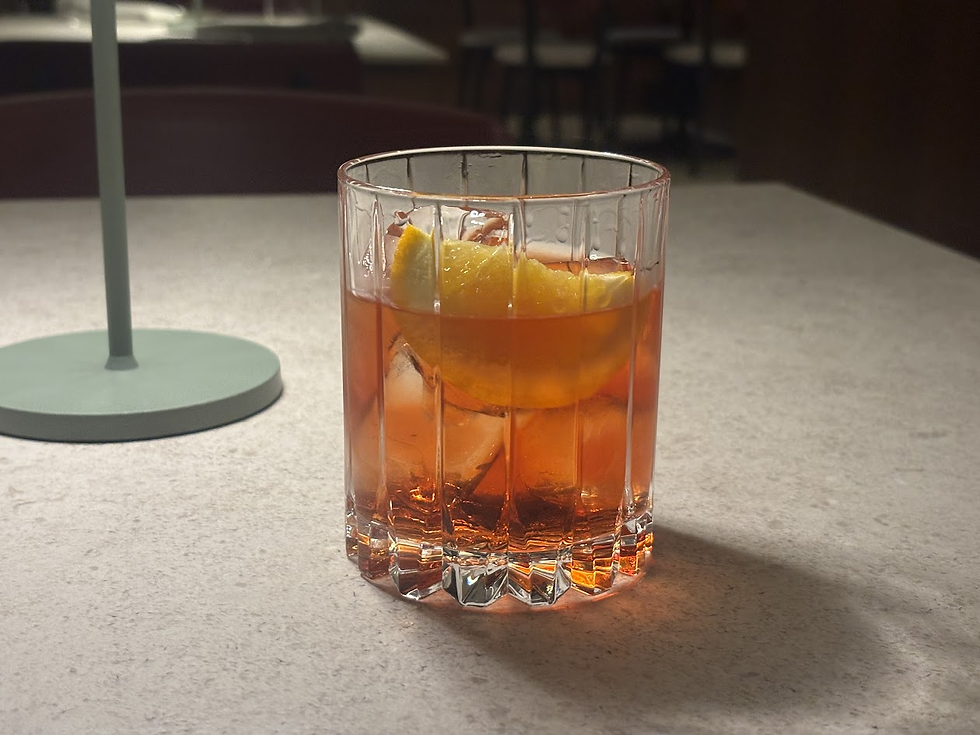
A Negroni.
Their version, fittingly called Our Negroni, used slightly fancier spirits than I’m used to. Part of me instinctively resisted that. A Negroni, in my mind, is supposed to be simple and unapologetically bitter.
Still, it worked.
Punchy. Bitter. Just enough citrus bite to wake everything back up.
I leaned back for a moment and looked around the room.
By now the restaurant had filled out, the earlier quiet replaced by the low hum of conversation and clinking glasses. Yet nothing felt chaotic. The service moved smoothly. Plates appeared and disappeared without disruption. The kitchen sent its dishes out at a rhythm that felt almost rehearsed.
And that’s when it clicked.
This place wasn’t just good.
It was coordinated.
The décor matched the tableware.
The floor team moved like they’d done this dance a thousand times.
The kitchen knew exactly when to push forward and when to pull back.
A quiet symphony, played without fuss.
The food itself walked a careful line between art and appetite, beautiful enough to admire, but never so precious that you hesitated before digging in.
Chef Ryan and his team clearly know what they’re doing.
When the bill arrived, the total came to €136.50.
For a tasting menu, a full evening of cooking like this, attentive service, and a kitchen firing on all cylinders, it felt almost modest.
Right now One80 sits on the Michelin Guide as Recommended.
But if they keep cooking like this…
I wouldn’t be surprised to see it climb a little higher.