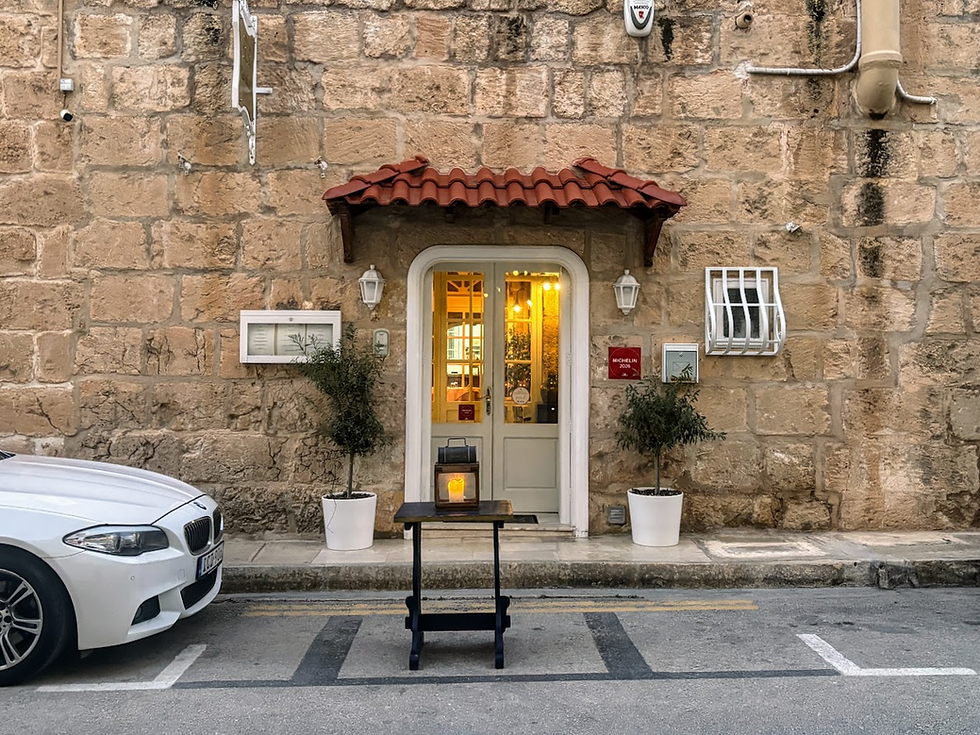
Stars Are Nice. Standards Are Better.
- Feb 16
- 13 min read
Updated: Feb 17
Restaurant: Adura, Mellieħa Visited on: February 14, 2026
My love story with Adura started with a cancellation, the most unromantic beginning possible.
Late August. A Sunday. We had a booking at Bottega Frawli, feeling organised, adult, smug. Then that morning I checked the route and realised we’d booked ourselves straight into the Mgarr festa. Fireworks, marching bands, roads barricaded with plastic chairs and municipal optimism. Parking? Forget it. We cancelled in a mild panic, the kind that can turn into a small domestic incident if you let it.
Instead, I called Zack.
The Backup That Wasn’t
Adura wasn’t a backup plan. It just hadn’t yet become the plan. Zack runs the floor like he’s hosting you in his own living room, and his partner-in-food, Chef Thomas, works the kitchen with the quiet confidence of someone who doesn’t need applause, just heat and a sharp blade. We got a table. Drove out that evening. No fireworks, no marching bands. Just hunger.
That first night wasn’t careful. It was ambitious.
A tasting menu that moved with intention, plates landing one after another with the kind of pacing that tells you someone back there is thinking three steps ahead. Aasheesh behind the bar, building cocktails that didn’t shout over the food but slid in beside it, precise and deliberate. Nothing sugary for the sake of it. Nothing ornamental. Every pour had a job.
We left a little stunned.
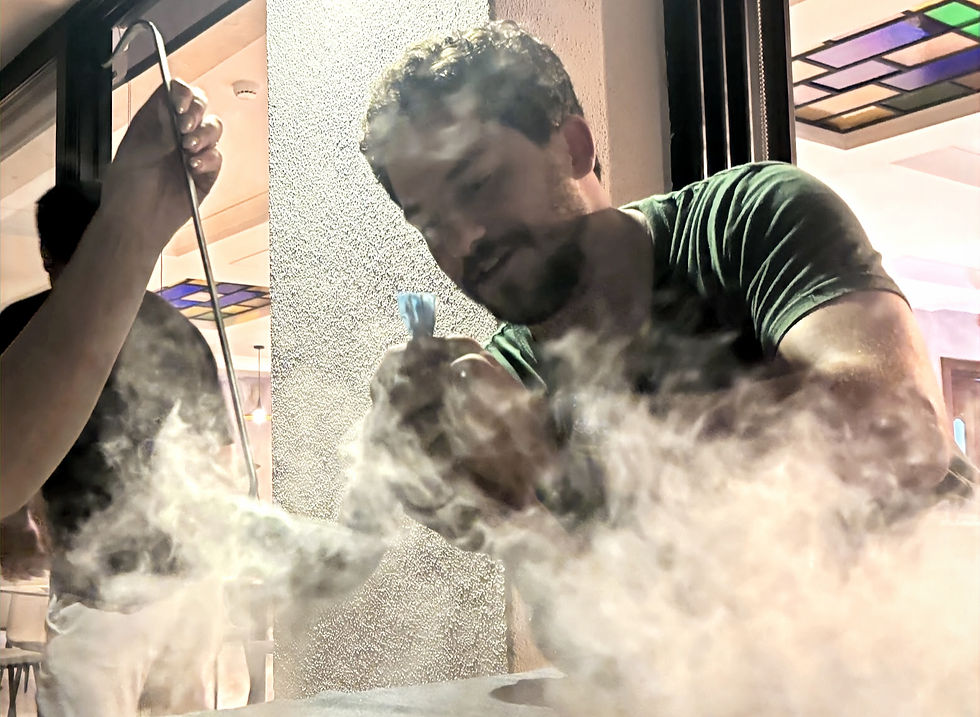
Since then, we’ve been back almost every month. That’s when something interesting happened. The seduction phase gave way to familiarity. The staff started recognising us. Then we were on first-name terms. Now, I don’t have to say a word after dessert, they know I’ll want a negroni. Bitter, cold, unapologetic.
That’s the thing about places like Adura. Familiar doesn’t mean stale.
In six months I’ve worked through three completely different tasting menus under Chef Tom’s hands. Different ingredients, different moods, different risks. He doesn’t recycle comfort. He recalibrates. There’s a restlessness there, the good kind. The kind that keeps you slightly off balance.
His bread arrives warm enough that you instinctively tear into it before it hits the plate properly. Steam escaping. Crust giving way with resistance, then surrender. And the ice creams, dense, clean, unapologetically flavoured, have no business being made in a kitchen that’s also juggling fermentations, reductions, and whatever controlled madness the next course requires.
Some combinations shouldn’t work on paper. And yet they land. Not because they’re weird for the sake of it, but because there’s restraint behind the risk. That’s the difference between experimentation and ego.
We sit there, every time, slightly braced for the next plate. Not to be comforted. To be challenged.
I didn’t plan on finding a go-to that night in August. I planned on parking near a festa and eating strawberries.
Instead, we found a place that keeps shifting just enough to stay alive. And that, in a country where familiarity can easily harden into complacency, feels rare.
Full Disclosure
Before I go any further, let’s get something straight.
Zack and I go back years.
We’ve never screamed at each other across a pass, but we’ve had long, occasionally obsessive debates about food, about pricing, about ego on a plate, about whether nostalgia is a crutch or a foundation. The kind of conversations that start over coffee and end three hours later with neither of you conceding entirely.
I admire his relentlessness. The way he keeps sanding down the details most people don’t notice. The way he shows up early, steady, composed, even when the room isn’t.
But admiration doesn’t buy him immunity.
He knows I don’t soften criticism to protect feelings. If something misses, I’ll say it. Not theatrically. Not cruelly. Just plainly. We’ve had those conversations too. They’re not dramatic. They’re constructive. And they’re part of why I trust the work.
So yes, there’s history here. I’m not pretending otherwise.
But proximity also sharpens your eye. You see the discipline behind the service. The recalibrations. The small corrections that guests never clock. Zack doesn’t just host, he reads the room, adjusts tone, manages tempo. The team around him is locked in.
No freelancing. No coasting.
I feel lucky to eat under their hands. Not because we’re friends. Because they’re serious.
Valentine’s Is a Stress Test
Now.
Valentine’s.
You want to test a restaurant? Go on the night when everyone expects magic and half the tables are measuring their relationship against the dessert course. Valentine’s isn’t romance, it’s pressure wrapped in linen.
We booked anyway.
Because trust is one thing. But curiosity is another.
And they’d been teasing duck pastrami and duck fat granola across their socials like it was a threat.
That’s not safe cooking. That’s not chocolate hearts and strawberries. That’s salt, cure, funk, crunch, on the most sentimental night of the year.
So we booked early.
Not just for love.
But also for the gamble.
Beauty vs Beast
We stepped in and were met with the familiar nods. The kind that say, we’ve got you. Coats taken. Glasses clinking somewhere in the dark. A low hum of conversation that never quite rose to noise.
The room was candlelit, not the blackout kind where you’re squinting at your plate, but the kind that softens edges. Faces glowed. Shadows moved. It felt deliberate. Intimate without being staged.
We thought we had the night mapped out.
We’d studied the menu like revision notes. Quietly agreed on our choices. Pre-decided the wine, the same Isabella Guasconi we’d opened on New Year’s Eve. I love that bottle. It drinks like a red that’s pretending to be a rosé. Structured, almost brooding, but with a clean snap at the finish that keeps it from getting heavy. It doesn’t sit politely. It lingers.
We were organised. Smug, even.
Then the server smiled and detonated the plan.
Zack, the maître d’, conductor of the room, and Aasheesh, ringmaster behind the bar, had decided to duel. Two cocktails. One night. Beauty and Beast.
Valentine’s, after all.
We were walked through the components, but somewhere around the phrase homemade burnt rosemary soda, I stopped pretending to absorb the details and just surrendered to curiosity.
I ordered the Beast.
Mezcal-based. It arrived in a clear tumbler holding a single oversized cube of ice, a delicate flower suspended at its centre like something trapped in amber. The liquid itself, deep brown, almost tea-dark.
First sip: smoke, then herbs. A sharp, green edge. It felt like someone had taken a respectable cup of tea and dragged it through a bonfire, then slipped in a shot of something dangerous. It wasn’t trying to charm me. It was daring me.
Across the table, my partner had the Beauty, lighter, brighter, deceptively elegant. She didn’t say much after the first sip. Just raised an eyebrow in that way that means this works.
Before we could dissect the drinks properly, the bread landed.
It’s never just bread there.

It arrived warm, not reheated, not theatrically warmed, properly warm. Steam lifting when you tore into it. The crust resisted for half a second before giving way, the crumb soft and elastic. You don’t slice this bread. You rip it.
The butter this time was stripped back. No olive dust. No embellishment. Just pale, whipped, almost glossy. It melted instantly, pooling into the torn surface like it had been waiting for it.
Simple. But not accidental.
On Valentine’s night, when everyone’s chasing spectacle, they started with bread and butter.
Confidence looks like that.
While we were still tearing at the bread, the amuse-bouches arrived.
The Quiet Flex
Miniature cones. Delicate, almost ridiculous in their precision. Each one packed with burratina cream, the top dusted in hibiscus powder, sharp pink against white. They stood upright in custom-made racks, built by Zack and Tom themselves. Not bought. Built.
That’s the thing. The details don’t get outsourced.
Alongside them came two crostini finally cubed cured amberjack, pickled beetroot and mezcal gel lay on top , the whole thing buried under a snowfall of beetroot powder.
You got sweetness first. Then cure. Then smoke. Then acid. Small bites, but layered. Intentional.


Nothing about it screamed for attention. It didn’t need to. It was a quiet flex.
And then, something unexpected.
Between courses, every couple was handed a question. Not gimmicky. Not cringey. Real questions. The kind that make you pause mid-sip and look up properly. Across the room you could see it happening, shoulders turning inward, phones abandoned, people actually talking.
On Valentine’s night, when most places rely on dim lights and inflated prosecco bills, Adura decided to engineer conversation.
That’s confidence.
The amuse were gone in seconds. Cones shattered. Crostini reduced to pink-stained crumbs. Just enough to wake the palate. Just enough to make you lean forward.
And then the real plates began to land.
For me: ham hock terrine.
For her: mi-cuit salmon.
No more flirting.
Now we were eating.
Old-World Bones
A precise cuboid of ham hock, glossy, almost trembling, held together by its own gelatin, no excess fat, no sloppiness. This is old-world cooking. The kind that predates tweezers and microgreens. The kind that built the scaffolding for everything we now call “modern European.”
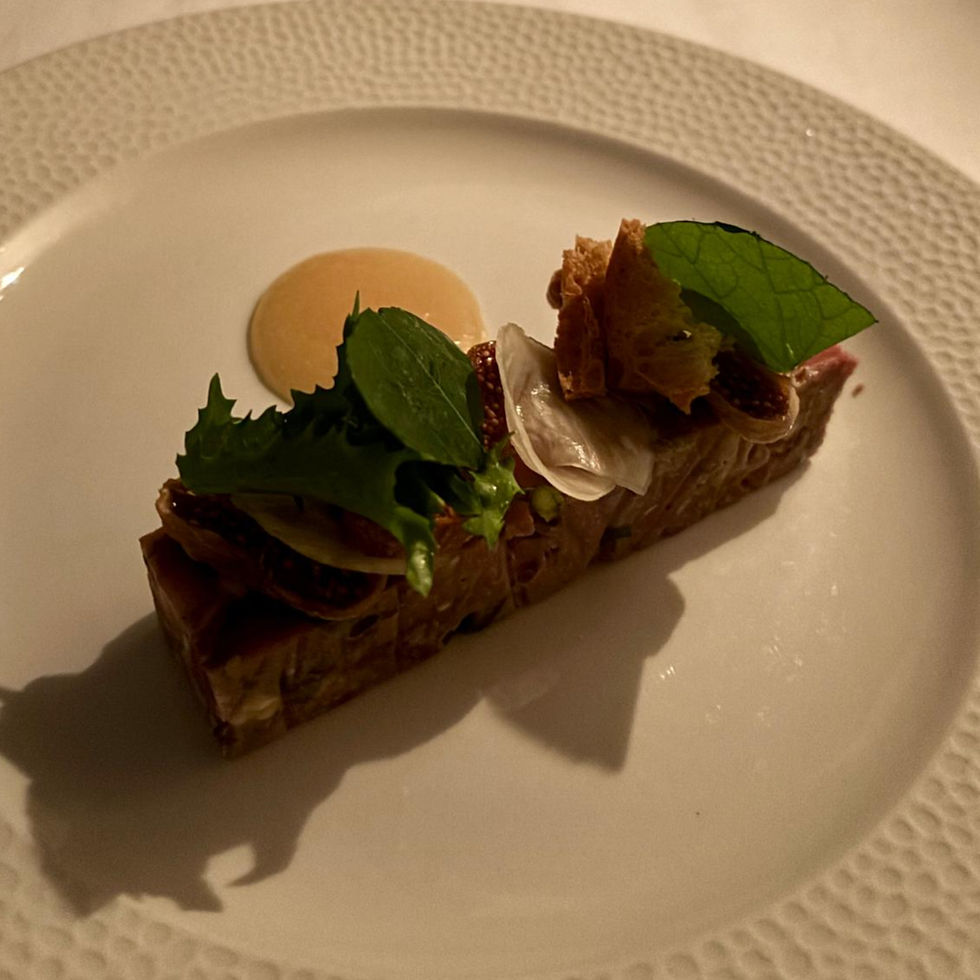
On top: paper-thin figs, sweet and sticky. Celeriac shaved so fine it curled slightly at the edges. A disciplined smear of quince gel on the side, sharp, floral, cutting through the richness.
You could taste the hours in it. The slow simmer. The patience. The decision not to overwork it.
Herby. Bright. Portion controlled without feeling stingy.
No theatrics. Just craft.
From there, we aligned our choices, no more splitting plates. We wanted the same experience, bite for bite. Tableware disappeared in a soft flurry. Crumbs brushed away with a small silver sweep of the hand. Wine refreshed without interrupting conversation.
Then the soup.
An ambitious take on cauliflower polonaise, a dish that usually leans heavy and nostalgic. This version felt sharpened.
The base was silk. Not thick for the sake of thickness, just enough body to coat the spoon. On top: shards of crispy chicken skin, salty and brittle. A quail egg, yolk just set, threatening to spill. And a golden-brown chicken croquette that cracked under pressure, collapsing into something molten and savoury inside.
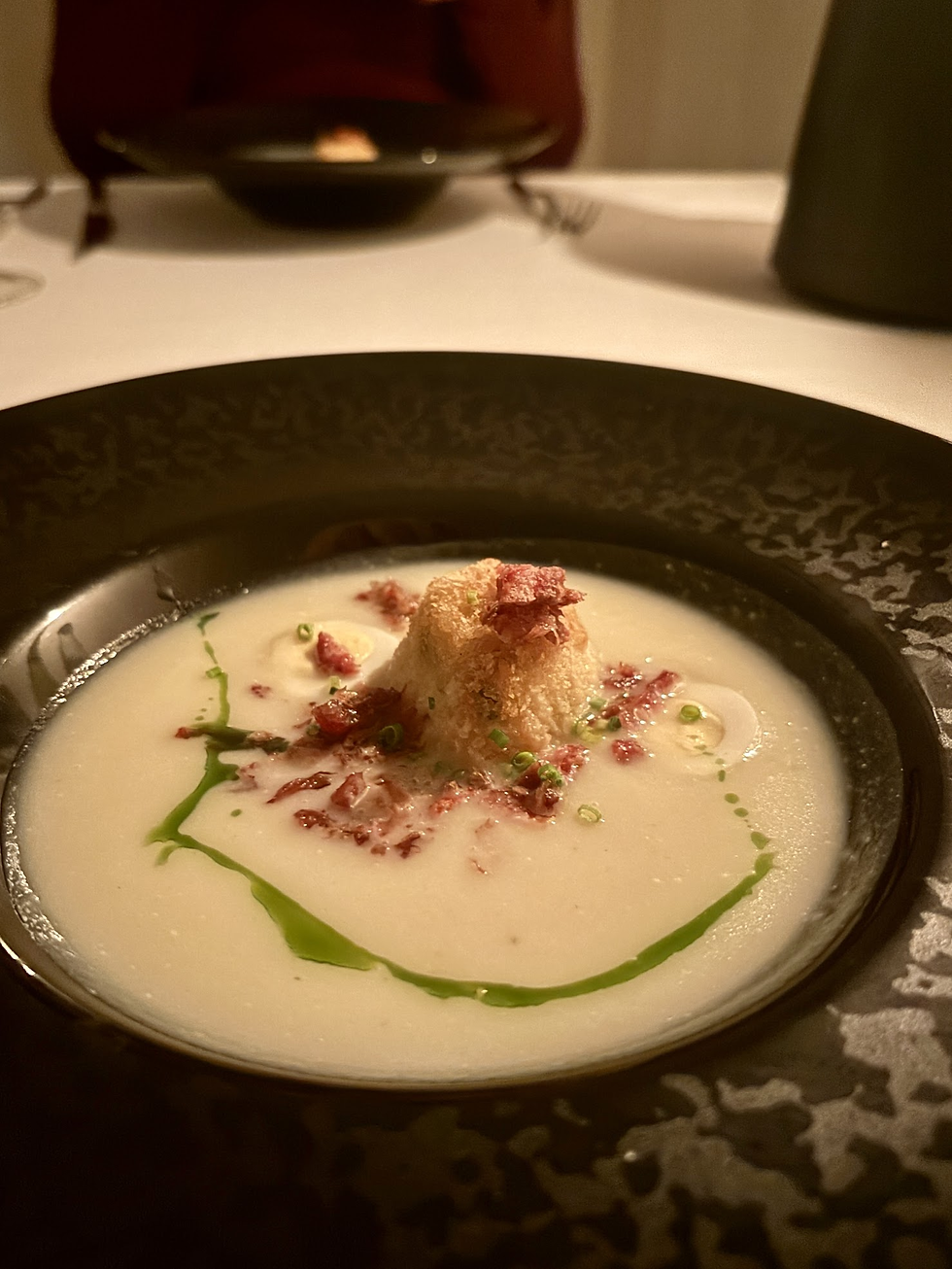
Poultry in three textures. Cauliflower carrying it all.
It came in a dark bowl that made the pale soup glow under candlelight, but more importantly, it kept the heat in. You felt it in your hands before you tasted it.
We didn’t talk much during that course.
Spoons moved. Plates cleared faster than we meant them to.
There’s a particular silence that happens when something hits properly.
This was that.
The Dare
And then it arrived.
The reason we booked.
The dare.
A plate of cultured cream risotto, loose and flowing, almost indecently soft, more silk than rice. Around it, a moat of duck and port sauce, dark and glossy, staining the plate like ink.
On top: thin slices of house-made duck pastrami, blushing at the edges. A reckless mound of duck fat granola scattered over the centre. Maraschino cherries glinting like jewels you’d normally accuse of being kitsch. Crisp shards of kale adding a brittle green snap.

On paper, this borders on madness.
In reality? Controlled chaos.
The risotto itself was lush, not stodgy, not overworked. It moved when you tilted the plate. The cultured cream gave it a faint tang, a quiet acidity humming underneath the fat.
Then the port sauce cut through, sharp, almost confrontational, dragging the whole thing back from the edge of excess. Sweetness from the cherries flashed and disappeared. The pastrami didn’t “melt.” It yielded. Salty, cured, slightly smoky. And that granola, toasted, savoury, unapologetically crunchy, kept breaking the softness, forcing contrast into every bite.
You never settled into one texture. It kept shifting under you.
We took the first bite at the same time.
Looked at each other.
Eyebrows up.
No commentary. No analysis. Just that silent acknowledgement that something slightly outrageous had landed perfectly.
And then we stopped talking altogether.
Spoons scraping. Plates rotated for optimal sauce capture. The kind of eating that’s focused, borderline greedy. By the time the plates were cleared, it felt abrupt, like someone had turned the lights on mid-song.
Was it generous? Yes.
Did I want more? Absolutely.
It’s the sort of dish you pretend you’d order “just once in a while.”
But the truth is, I’d eat that dish on a Tuesday with no occasion at all.
The Reckoning
If the risotto was the seduction, the short rib was the reckoning.
Pressed beef short rib, lacquered in a Burgundy reduction so dark it almost swallowed the candlelight. Not a thin jus, a proper stew base. Silver-skin onions swollen and sweet. Mushrooms collapsed into the sauce. Pancetta threading salt and smoke through everything.

This wasn’t light.
At the base: pomme purée so smooth it barely held shape. The kind that spreads before you touch it. Butter-forward. No apology. Just there to carry the weight of what sat on top.
And the beef, pressed, portioned cleanly, gave way under the fork without theatrics. No dramatic shredding. Just resistance, then surrender. Gelatin, fat, wine, time. All doing their quiet work.
Yes, it was bœuf bourguignon at heart.
But tightened. Refined. The edges cleaned up without stripping away its soul. No peasant pot vibes here, this was the same dish, but with posture.
You could feel the hours in it. The reduction. The patient skimming. The restraint not to oversalt what wine and pancetta already handled.
We slowed down for this one.
You have to.
It’s the kind of plate that makes you aware of your own appetite, where pleasure and excess start negotiating. Belts shift slightly. You lean back between bites. You consider surrendering.
And then you don’t.
Because there were still four courses to come.
And somehow, the kitchen wasn’t finished with us yet.
We edged toward dessert.
But first, cheese.
A thick, unapologetic wedge of Pays d’Auge Camembert, its top torched just enough to blister and bronze. The rind slightly caramelised. The interior on the verge of collapse.
It sat on a slice of bara brith, that dense Welsh tea loaf studded with dried fruit and spice, somewhere between bread and cake, but less cloying than a Christmas slab.
Dark. Fragrant. Humble.
Alongside it, a quarter of poached pear. Soft but holding its shape.

You cut through the Camembert and it gave way immediately, creamy centre spilling into the crevices of the fruit loaf beneath. The sweetness of the bara brith caught the salt and funk of the cheese. The pear added a clean, tart lift, just enough acidity to reset the mouth after the short rib’s weight.
And then you realise what’s happening.
Normandy. Wales. Malta.
French dairy. Welsh tea bread. A pear grown locally by a farmer who knows Zack and Tom by name.
It sounds like a gimmick when you list it out. It didn’t taste like one.
It tasted considered.
The brûléed top added the faintest bitterness, a whisper of smoke. The loaf soaked up the softened cheese. The pear kept it from tipping into heaviness.
After wine-dark beef and buttered potatoes, this wasn’t just cheese.
It was recalibration.
A deep breath before sugar.
Reset
Then came the ritual I wait for on Tom’s menus.
The pre-dessert ice cream.
A small ramekin landed in front of us, unassuming. Inside, a clean quenelle of milk ice cream. No theatrics. Just precision. On top: raspberries, some fresh and bleeding gently into the cream, others flash-frozen with liquid nitrogen, shattering under the spoon. A scatter of cinnamon crumble dusted over everything like warm sand.
It looked restrained.
It wasn’t.

The ice cream itself was impossibly smooth, no ice crystals, no grain. Just cold silk. Proper dairy. The kind that coats your mouth before you even register flavour. Sweet, but not cloying. Balanced.
Then the raspberries hit, sharp, acidic, bright enough to snap you upright after the cheese. The nitro’d ones cracked between your teeth, releasing their flavour in a cold burst. And the cinnamon crumble, warm, spiced, slightly sandy, grounded the whole thing, keeping it from floating off into sugar-land.
This is the point in the meal where the kitchen proves control.
Too sweet and you’re done for the night. Too heavy and you resent it.
This? It reset us.
And yes. I did briefly question why Tom isn’t out there opening a gelateria and quietly embarrassing half of Italy. Because this isn’t novelty ice cream. It’s disciplined. Intentional. Mature.
We scraped the ramekin clean. No ceremony. Just quiet determination.
Sweet tooth officially switched on.
Now we were ready for the real sugar.
Melt
Chocolate-covered strawberries have a chokehold on Valentine’s menus.
They’re easy. Predictable. Dip, set, plate. Nostalgia on autopilot.
Adura didn’t take that route.
When dessert landed, it was just a single chocolate dome. Glossy. Opaque. Sitting in the centre of the plate like it knew exactly what it was doing. No strawberries in sight. No theatrics yet.
The server leaned in, explained, and then began to pour.
Molten crème de chocolat chaud streamed over the dome, heat hitting shell. It trembled. Softened. Then collapsed inward, melting away to expose what had been hidden beneath.
The room doesn’t need fireworks when you’ve got that moment. Just warm chocolate and gravity.
The server clocked the look on our faces and retreated quickly. Smart move.
Inside: fresh strawberries, bright and sharp. A dense chocolate cake base anchoring everything. And now that river of hot chocolate pooling through it all, saturating crumb, staining fruit.
It wasn’t trying to reinvent the wheel.
It was taking the idea of chocolate and strawberries, that overworked Valentine’s cliché, and pushing it to its logical extreme. More heat. More depth. More texture. No waxy shell, no polite bite.
You broke through soft cake, dragged strawberries through molten chocolate, and let it all mix into something messy and indulgent.
Familiar, yes.
But elevated past laziness.
This wasn’t a dipped strawberry.
This was what that idea looks like when someone actually cares.
The kitchen paced the night carefully.
They pushed. Then they pulled back.
Just as we felt the edge of fullness creeping in, that dangerous moment where pleasure tips into fatigue, they closed with restraint.
Petit fours.
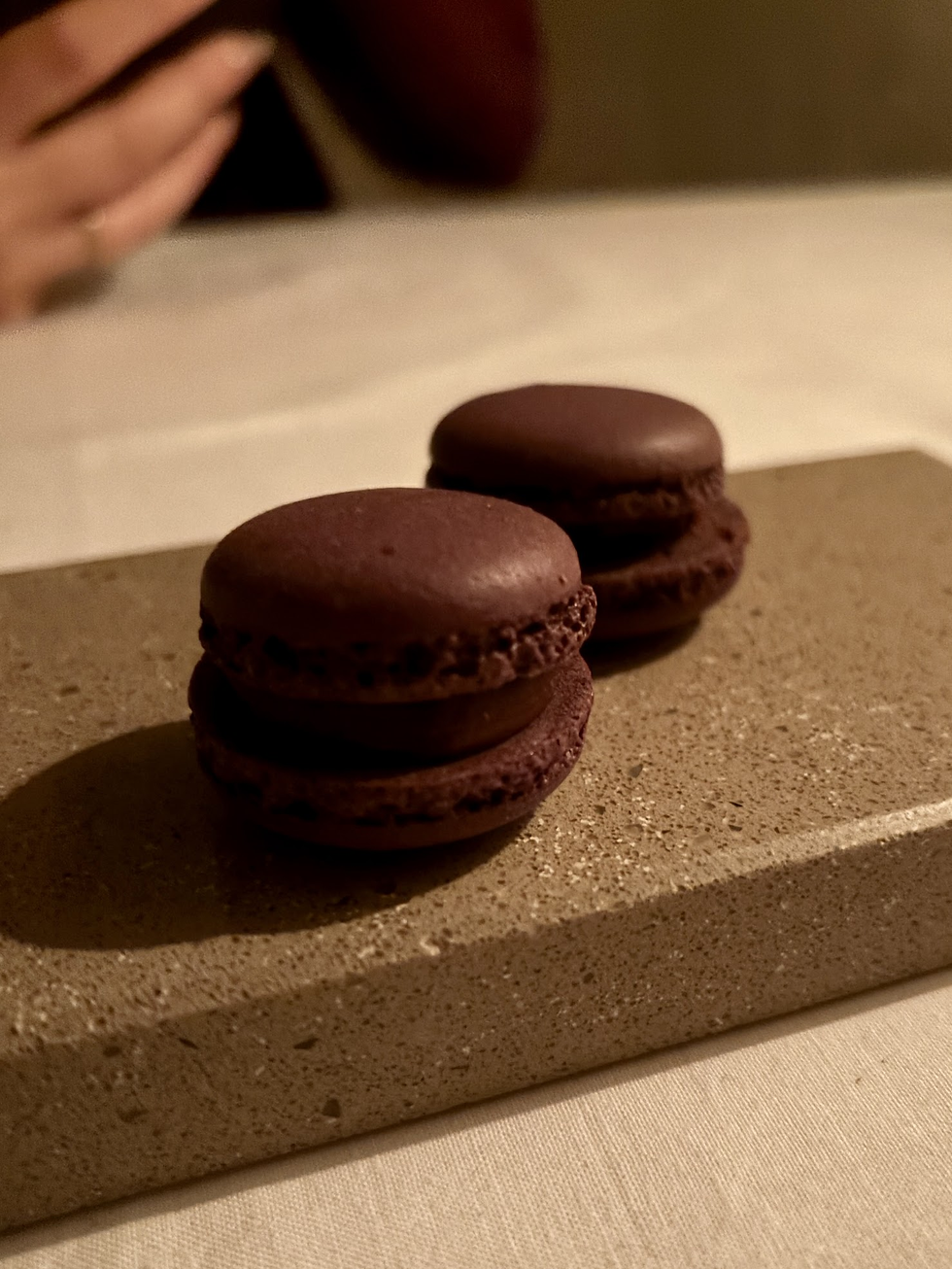
No over-engineered sugar sculptures. No fireworks. Just a macaron each.
Chocolate.
Macarons are temperamental little things. One degree off and they crack. One fold too many and they flatten. One humid day and they sulk.
These didn’t sulk.
Smooth domes. Defined pieds. Uniform. No hollow shells. When you bit through, the exterior gave a gentle snap before yielding to a centre that was airy without being dry.
Inside, a dark chocolate ganache, we were later told it was made by an angry Frenchman somewhere deep in Adura’s kitchen, which frankly feels correct. It tasted disciplined. Slightly bitter. Not overly sweet. The kind of filling that doesn’t beg for approval.
One bite.
Two bites.
Gone.
It wasn’t a grand finale. It was a quiet closing note. A final kiss, yes, but the kind you feel the next morning.
Standards
We leaned back properly for the first time all night, and espressos were ordered. Necessary fuel.
They arrived quickly, and our waiter apologised, sincerely, that the crema had broken during service. I hadn’t even noticed. I just needed caffeine for the drive home.
But they noticed.
And they refused to charge us for coffee that didn’t meet their own standards.
That’s the thing.
You can build chocolate domes and duck fat granola and pressed short ribs in Burgundy reductions. But what lingers isn’t just technique.
It’s standards.
It’s pride.
It’s a team that won’t let even a broken crema slide.
We walked out full. Not just of food.
Of intent.
Michelin drops tomorrow.
Maybe they saw it. Maybe they didn’t.
But if the Guide is meant to recognise craft, restraint, and the kind of obsession that builds custom cone racks and refuses to charge for an imperfect espresso, then Adura is already playing at that level.
Stars are nice.
Standards are better.
Long after the lists are published and debated, what remains is simpler:
A room lit just right.
A shimmering jus of duck and port staining porcelain dark.
A chocolate dome collapsing under heat.
A broken crema that never made it onto the bill.
That’s not hype.
That’s intent.